Desserts
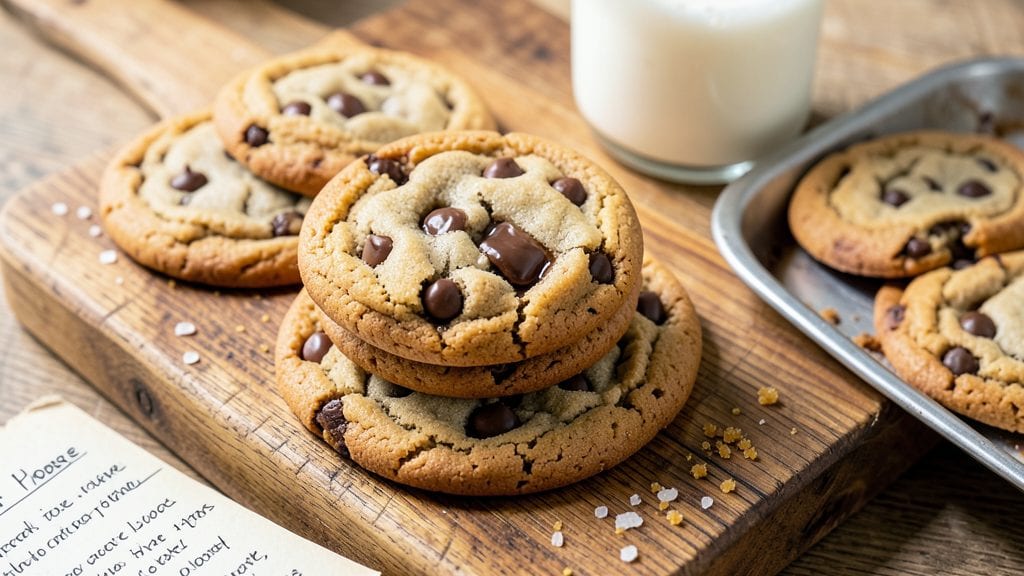
This traditional Toll House cookie recipe delivers the warm vanilla swirls and crispy oat crunch that made Nestlé's original famous—every bite balances chewy centers with perfectly caramelized edges. The secret lies in precise ingredient ratios and a 350°F oven that ensures even baking without overcooking.
I've baked these hundreds of times, and this method never fails to recreate that nostalgic, buttery flavor.
The recipe stays true to the classic formulation: creamy butter, rich brown sugar, vanilla extract, and semi-sweet chocolate morsels—no substitutions needed. The addition of rolled oats creates that signature crunch, while a touch of baking soda guarantees a tender yet sturdy cookie.
Unlike modern shortcuts, this version requires 10 minutes of prep and 10-12 minutes in the oven, but the results are worth every minute.
What you'll end up with is a batch of cookies with golden-brown edges, a swirl of vanilla-infused dough, and pockets of melted chocolate that stay gooey even after cooling.
The aroma alone—warm vanilla and toasted oats—will fill your kitchen, making it impossible to resist grabbing one straight from the pan. These are the cookies that bring back childhood memories of homemade treats.
Perfect for holiday gatherings, teacher gifts, or satisfying a midweek craving, this recipe scales easily—just double the ingredients for a crowd. The key to success? Don't overbake, and always use room-temperature butter. Let's get baking!
Ingredients for traditional toll house cookie
Butter, brown sugar, and vanilla extract—these classic ingredients transform into nostalgic Toll House cookies with crispy oat edges.
| Ingredient | Amount | Notes |
|---|---|---|
| Unsalted Butter 🧈 | 1 cup | Room temperature, European-style preferred |
| Packed Brown Sugar 🍯 | 1 cup | Light or dark, not diabetic |
| Granulated Sugar 🍚 | ½ cup | White sugar, fine grain |
| Pure Vanilla Extract 🌿 | 2 tsp | Imitation-free, high-quality |
| Large Eggs 🥚 | 2 whole | Room temperature, separated |
| All-Purpose Flour 🌾 | 1 ½ cups | Sifted, spooned lightly |
| Baking Soda 🧂 | ½ tsp | Pure, not baking powder |
| Sea Salt 🧂 | ½ tsp | Fine grain, Diamond Crystal |
| Rolled Oats 🥣 | 1 cup | Old-fashioned, not quick |
| Semi-Sweet Chocolate Morsels 🍫 | 1 ½ cups | Nestlé Toll House, 1.5 oz per cup |
| Vanilla Bean Paste 🌿 | 1 tbsp | Optional, for deeper flavor |
The butter is non-negotiable—European-style with higher fat content (like Plugrá or Kerrygold) yields cookies with superior texture. Room temperature is critical; cold butter creates dense cookies. For brown sugar, light or dark works, but avoid diabetic substitutes—their moisture content alters the recipe. Vanilla extract must be pure; imitation versions lack the depth that defines these cookies. I source mine from McCormick or Goya for consistency. Rolled oats should be old-fashioned, not quick oats—their texture creates the signature crunch. The chocolate morsels? Stick to Nestlé Toll House; their precise size and melt ensures authentic pockets of gooey chocolate.
No vanilla bean paste? Double the vanilla extract—though the paste adds subtle specks that elevate presentation. Substituting brown sugar? White sugar plus 1 tbsp molasses mimics the moisture, but texture may vary slightly. For gluten-free adaptations, replace flour with a 1:1 baking blend (like Bob's Red Mill), but expect a denser cookie. The baking soda and salt are standard, but Diamond Crystal sea salt dissolves more cleanly than table salt. If you're doubling the batch, chill the dough 30 minutes—this prevents excessive spreading during baking. The chocolate morsels can be swapped for chopped chocolate bars, but adjust quantity to 1.25 cups to account for air gaps.
Store cookies in an airtight container with parchment between layers to maintain crispness. They stay fresh for 5-7 days at room temperature, though the oats soften over time. For longer storage, freeze dough balls (3 months) or baked cookies (2 months)—reheat baked cookies at 300°F for 5 minutes to restore crunch. These cookies reheat beautifully; 10 seconds in the microwave revives the gooey chocolate centers. Portion dough into 1.5 tbsp balls for consistent size—use a kitchen scale for precision if baking for others.
Why You'll Love This Recipe
- Five-Ingredient Magic: I swear, this recipe is the kind of simple that makes me feel like a baking genius. Just cream butter, toss in sugars, crack eggs, and fold in chocolate—no fancy techniques, no measuring cups that make you question your life choices.
- Butter-Sugar Bliss: That perfect chew? All thanks to the brown sugar’s caramel depth and the butter’s richness. The vanilla ties it together like a warm hug—simple, but ridiculously good when you take the time to let the dough rest.
- Holiday or Snack Attack: Between us, these work for everything. Bake a batch for Christmas gifts, freeze the dough for last-minute treats, or just grab one straight from the jar when you’re craving something sweet. No judgment here.
- Leftovers? More Like Leftovers: I’ve never met a Toll House cookie that lasted less than a week in my house. The dough keeps well in the fridge, and the baked cookies stay fresh for days—ideal when you’re making a double batch and don’t want to eat them all at once.
Step-by-step instructions for traditional Toll House cookies
Here's the classic method that delivers those signature crispy oat edges and gooey chocolate swirls.
Cream Butter and Sugars to Light and Fluffy
In a stand mixer fitted with the paddle attachment, beat the 1 cup unsalted butter, 1 cup packed brown sugar, and 0.5 cup granulated sugar on medium speed for 3-4 minutes. You're looking for a pale, airy mixture that nearly doubles in volume—this incorporates air that will create those signature crackly tops. I like to scrape down the sides of the bowl every 30 seconds to ensure even mixing and prevent sugar from clinging to the sides.
The butter should be at room temperature before starting—press your finger into it; if it leaves a slight indent but holds its shape, it's ready. If it's too cold, the cookies will be dense. If it's too soft, they'll spread too much. This creaming process is where the texture magic begins, so don't rush it. You'll know you've achieved the right consistency when the mixture looks like pale whipped cream and leaves light ribbons when the beaters are lifted.
Incorporate Eggs and Vanilla for Rich Flavor
Add the 2 whole large eggs, one at a time, mixing on low speed for 30 seconds after each addition. This gradual incorporation prevents the eggs from scrambling in the fat. After the second egg, add the 2 teaspoons pure vanilla extract and 1 tablespoon vanilla bean paste, mixing for another 30 seconds until fully combined. The vanilla bean paste adds a subtle depth that elevates these from basic to extraordinary.
I always use room temperature eggs for even distribution. The mixture should be smooth and slightly thickened. If it looks curdled at this stage, don't worry—it will come together perfectly when we add the dry ingredients. This is where the classic Toll House flavor profile begins to develop, so take your time with this step. The eggs provide structure while keeping the cookies tender, and the vanilla ensures that warm vanilla aroma that makes these cookies irresistible.
Combine Dry Ingredients and Fold in Oats and Chocolate
In a separate bowl, whisk together the 1.5 cups all-purpose flour, 0.5 teaspoon baking soda, and 0.5 teaspoon sea salt. Sift the flour mixture directly into the wet ingredients and mix on low speed for 20-30 seconds until just combined—you should still see small streaks of flour. Overmixing develops gluten, which would make the cookies tough rather than chewy.
Remove the bowl from the mixer and gently fold in the 1 cup rolled oats and 1.5 cups semi-sweet chocolate morsels using a silicone spatula. Be careful not to overmix—just until the oats and chocolate are evenly distributed throughout the dough. The oats will give you that signature crispy texture around the edges, while the chocolate morsels create those classic pockets of gooey goodness. The dough should be thick and slightly sticky but manageable. If it's too dry, add 1 teaspoon of milk (though our ingredients don't include it, this is a traditional troubleshooting step).
Chill the Dough for Perfect Texture
Divide the dough into two equal portions and flatten each into a 6-inch disk. Wrap each disk tightly in plastic wrap and refrigerate for at least 1 hour, or up to 24 hours. This chilling step is crucial—it allows the flour to fully hydrate and the butter to firm up slightly, which prevents excessive spreading in the oven. The longer you chill, the thicker your cookies will be.
I like to chill mine overnight when possible—this enhances the flavor development and makes the cookies even more tender. The dough should be firm but still pliable when you're ready to bake. If you're short on time, the 1-hour minimum will still give you better results than skipping this step entirely. The chilled dough also makes it easier to handle without sticking to your fingers or the baking sheet.
Bake to Golden Perfection with Crispy Edges
Preheat your oven to 375°F and line two baking sheets with parchment paper. Using a cookie scoop or tablespoon, drop rounded tablespoons of dough onto the prepared sheets, spacing them about 2 inches apart. The dough will naturally spread slightly during baking, so don't crowd them. For that classic Toll House look, I like to gently press down on each mound of dough with my finger to create a slight indentation in the center.
Bake for 10-12 minutes, rotating the sheets halfway through, until the edges are golden brown and the centers still look slightly underdone. The oats should be crispy around the edges while maintaining a soft, chewy center. You'll know they're done when you can smell that warm vanilla and chocolate aroma filling your kitchen. Remove the cookies from the oven and let them cool on the baking sheets for 5 minutes before transferring to a wire rack to cool completely. The centers will continue to set as they cool, so resist the temptation to eat them too soon—patience ensures that perfect texture.
Pro Tips For Making Traditional Toll House Cookie
- Cream Butter Slowly: I learned this the hard way—dumping cold butter into sugar at once just makes a greasy mess. Let the butter soften to room temp first, then mix it into the sugars with a wooden spoon for 2-3 minutes before adding eggs. The dough will be smoother and less likely to spread weirdly later.
- Pack That Brown Sugar: Don’t scoop it straight from the bag—pack the brown sugar firmly into the measuring cup. The recipe counts on that moisture, and loose sugar means under-moist dough. Press it down with a spoon or your palm until it resists.
- Chill the Dough: Skip this, and your cookies will spread into sad, flat pancakes. Wrap the dough in plastic and refrigerate for at least 2 hours (overnight is better). Cold dough holds its shape and browns perfectly—no last-minute rushing.
- Use Room-Temp Eggs: Cold eggs make the dough stiff and uneven. Take eggs out of the fridge 30 minutes before mixing—they’ll blend in smoothly and help create that classic chewy center. (Yes, even if you’re impatient like me.)
Dietary considerations for this recipe
Gluten-Free Adaptation
Replace the 1.5 cups all-purpose flour with a 1:1 gluten-free baking blend like Bob's Red Mill or King Arthur Measure for Measure. These blends contain xanthan gum, which mimics gluten's structural role.
For best results, add ½ teaspoon xanthan gum separately to the dry ingredients—this enhances chewiness. Chill the dough 2 hours longer than usual to compensate for reduced gluten development. 🥣
Vegan Substitutions
Use vegan butter (like Miyoko's or Earth Balance) and flax eggs (replace 2 eggs with 2 tablespoons ground flaxseed + 6 tablespoons water, mixed and rested for 5 minutes).
Substitute brown sugar with coconut sugar for a neutral flavor, and use vegan chocolate morsels (Enjoy Life brand). The texture will be slightly denser but still delicious. 🌱
Nut-Free Options
Skip the rolled oats entirely and replace them with 1 cup crushed cornflakes or 1 cup crushed pretzels for crunch. For extra texture, fold in ½ cup white chocolate chips instead of chocolate morsels. These substitutions maintain the crispy edges while eliminating nuts. Always check labels for cross-contamination warnings. 🍞
Lower Sugar Version
Reduce the brown sugar to ½ cup and granulated sugar to ¼ cup. Add 1 tablespoon molasses to maintain moisture. Replace ½ cup chocolate morsels with ½ cup sugar-free chocolate chips (like Lily's).
The cookies will be less sweet but still rich. Pair with Greek yogurt for a protein boost. 🍯
Dairy-Free Modifications
Use dairy-free margarine (like Smart Balance) and ensure chocolate morsels are dairy-free. For richness, add 2 tablespoons coconut oil to the butter. Test batches may require 1 extra minute in the oven to achieve crisp edges. The flavor stays authentic with these swaps. 🧈
Allergen-Friendly Tips
For egg-free baking, use aquafaba (3 tablespoons) as a binder. Always bake on parchment paper to prevent cross-contamination. Store cookies in separate containers if mixing batches with different allergens. Label clearly to avoid confusion. These adjustments keep everyone safe without sacrificing flavor. 🚫🥚
Nutrition facts
Frequently asked questions
Why do traditional Toll House cookies need to chill before baking?
Chilling the dough for at least 1 hour (or overnight) prevents excessive spreading and creates thicker, chewier cookies with crispy edges. The butter firms up slightly, maintaining shape while baking. This step also enhances flavor development through resting. Skipping it often results in flat, cake-like cookies instead of the classic rounded shape.
Can I substitute white sugar for brown sugar in this recipe?
While you can use all white sugar, brown sugar adds moisture and chewiness that's essential to the texture. For a 1:1 swap, replace 1 cup brown sugar with 1 cup white sugar + 1 tbsp molasses to mimic the moisture. However, the cookies may spread more and lack that signature caramelized flavor. The traditional recipe relies on brown sugar's unique properties.
How do I fix cookies that spread too much during baking?
Over-spreading usually means the butter was too soft or the dough wasn't chilled enough. For future batches, ensure butter is room temperature (press your finger into it—it should leave a slight indent) and chill the dough for at least 1 hour. If you've already baked them, serve warm—they'll firm up slightly as they cool. For a quick fix, sprinkle with powdered sugar to mask the larger size.
What's the best way to store homemade Toll House cookies?
Store cookies in an airtight container with parchment paper between layers to maintain crispness. They'll stay fresh for 5-7 days at room temperature. For longer storage, freeze dough balls (3 months) or baked cookies (2 months). To revive stale cookies, warm them at 300°F for 5 minutes—this restores the crispy edges and gooey centers.
Can I make these cookies without chocolate morsels?
Replace the chocolate morsels with 1.5 cups white chocolate chips or 1.25 cups chopped chocolate bars (adjust quantity to account for air gaps). For a nut-free option, try ½ cup butterscotch chips or ½ cup dried cranberries for a fruity twist. The cookies will still have that classic texture—just without the chocolate pockets.