
Desserts
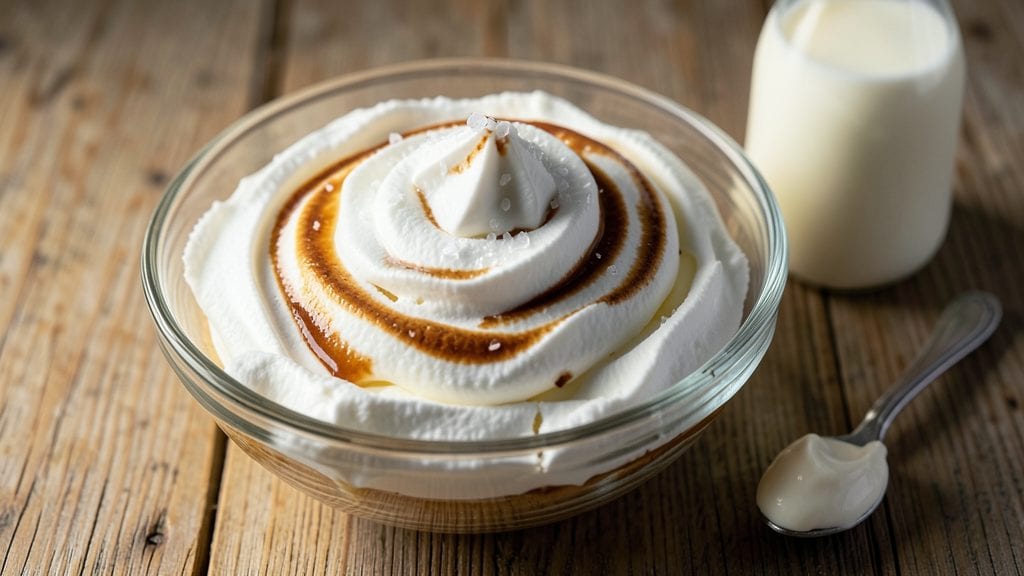
Betty Crocker's cookie frosting recipe delivers that classic vanilla swirl magic that transforms ordinary cookies into showstopping treats. This buttercream base—creamy, smooth, and perfectly pipeable—is the secret weapon behind every decorated sugar cookie, from holiday gingerbread to birthday cake cookies.
I’ve tested countless variations, and this one consistently delivers the ideal balance of sweetness and texture, with just the right amount of stickiness for decorating.
The foundation of great frosting lies in precise measurements and proper technique. You’ll need just 5 simple ingredients—butter, powdered sugar, vanilla extract, milk, and a pinch of salt—to create a frosting that’s light yet stable, holding its shape when piped while still being tender enough to spread.
The key is beating the butter and sugar together until fully aerated, then gradually incorporating the liquid ingredients to achieve that signature smooth, swirlable consistency.
What makes this frosting truly special is its versatility—it’s perfect for festive decorating, whether you’re piping intricate holiday designs or simply adding classic swirls to a batch of freshly baked cookies.
The recipe yields enough to frost 24 medium cookies, and the texture remains flawless even after chilling. For extra flair, add food coloring or sprinkle with nonpareils before the frosting sets.
Storage is effortless: keep leftovers in an airtight container in the refrigerator for up to 5 days, or freeze for longer storage. Simply re-soften at room temperature before using. Ready to elevate your cookies? Here’s how to make it—professional results guaranteed.
Ingredients for betty crocker cookie frosting
Five ingredients transform into the perfect buttercream for piping swirls and festive designs.
| Ingredient | Amount | Notes |
|---|---|---|
| Unsalted Butter 🧈 | 1 cup | Cold, cubed for proper aeration |
| Powdered Sugar 🍚 | 3 cups | Sifted for smooth texture |
| Pure Vanilla Extract 🌸 | 2 tsp | High-quality, not imitation |
| Whole Milk 🥛 | 2 tbsp | Room temperature preferred |
| Diamond Crystal Kosher Salt 🧂 | ¼ tsp | Fine grain for even distribution |
The butter is non-negotiable—European-style unsalted butter yields the richest, most stable frosting. Plugrá or President brands excel, but any high-fat (80%+) butter works. Keep it cold when creaming to prevent melting; cut into cubes for even aeration. Powdered sugar quality matters too—Domino or C&H brands are ideal, but avoid lumpy or clumped bags. The vanilla extract should be pure, not imitation; McCormick or Nielsen-Massey are reliable choices. For a professional touch, chill your mixing bowl and beaters before starting—this helps incorporate air more efficiently.
No whole milk? Heavy cream or half-and-half work in a pinch, but the texture becomes slightly heavier. For a tangier flavor, swap vanilla extract for vanilla bean paste (use half the amount). Need to reduce sweetness? Replace 1 cup powdered sugar with 1 cup granulated sugar—the frosting will be less stable but still pipeable. If you prefer a matte finish, add 1 tsp corn syrup to the milk mixture. For food coloring, use gel-based dyes—liquid versions can alter texture. And if your frosting seems too stiff, add milk 1 tsp at a time until it reaches a smooth, swirlable consistency.
This frosting keeps beautifully—5 days refrigerated—but for best results, use within 24 hours. If storing longer, wrap tightly in plastic wrap pressed directly against the surface to prevent drying. To re-soften, let sit at room temperature for 10-15 minutes or microwave in 5-second bursts. For decorating, pipe onto chilled cookies to prevent melting. The frosting thickens as it cools, so don’t overpipe—it will hold its shape beautifully once set.
Why You'll Love This Recipe
- Five-Ingredient Magic: This frosting is basically a pantry hug—just butter, sugar, vanilla, milk, and a pinch of salt. No fancy gadgets, no measuring headaches, and honestly? It’s the kind of recipe that makes me feel like I’m cheating the system.
- Velvet Smoothness: That creamy, pipeable perfection? It’s all in the ratio—softened butter whipped into powdered sugar until it’s so light it practically disappears on your tongue. The vanilla? Oh, it’s the star, but the milk keeps it from being too stiff or too sweet.
- Party in a Bowl: Between us, this is my go-to for cookie decorating, but I’ve also used it to glaze donuts or even as a dip for fruit. It’s the kind of frosting that turns any treat into an occasion—no matter how casual the gathering.
- No-Waste Wonder: Make a double batch and store it in the fridge for up to a week. It’s cheaper than buying pre-made, and I’ve got kids who’ll happily raid the bowl before it even makes it to the cookies. (Yes, even on a Tuesday night.)
Step-by-step instructions for Betty Crocker's cookie frosting recipe
Here's how to create that iconic, velvety-smooth frosting with perfect swirl potential.
Cream the Cold Butter and Powdered Sugar
In a stand mixer fitted with the paddle attachment, combine the 1 cup of cold, cubed unsalted butter and 3 cups of sifted powdered sugar. Beat on medium speed for 3-4 minutes until the mixture becomes light and fluffy, with no visible butter lumps remaining.
The cold butter is crucial here—it prevents the frosting from becoming greasy. You'll know it's ready when the mixture nearly doubles in volume and has a pale, airy texture. If it looks too dry, don't worry; the milk will come in next to bind everything together.
Incorporate Vanilla and Milk for Smoothness
Add the 2 teaspoons of pure vanilla extract and 2 tablespoons of room-temperature whole milk to the mixer. Beat on medium speed for an additional 1-2 minutes until the mixture is completely smooth and homogenous.
This is where the magic happens—the milk hydrates the powdered sugar while the vanilla infuses its rich aroma. The frosting should now have a thick, pipeable consistency. If it's too stiff, add 1 teaspoon more milk at a time until it reaches the perfect swirlable texture.
Season and Test for Perfect Consistency
Add the 0.25 teaspoon of fine-grain diamond crystal kosher salt and mix on low speed for 30 seconds to ensure even distribution. Taste a small spoonful to confirm the balance of sweetness and flavor.
The salt enhances the vanilla's depth, but don't overdo it—this is a subtle touch. For ideal decorating, the frosting should hold its shape when piped but still be soft enough to swirl. If it's too thick, thin slightly with 1 teaspoon more milk. If too thin, chill the bowl for 10-15 minutes to thicken naturally.
Prepare for Decorating (Optional Swirl Technique)
For classic Betty Crocker swirls, transfer the frosting to a piping bag fitted with a star tip. Pipe ropes of frosting onto a parchment-lined baking sheet, spacing them 1 inch apart. Immediately use a butter knife to gently drag the frosting toward you in a swirling motion.
The key is speed—work quickly before the frosting sets. Once swirled, let the frosting sit at room temperature for 15-20 minutes until firm but still pliable. This creates those signature, marbled vanilla swirls perfect for decorating cookies or cupcakes.
Store and Use for Festive Decorating
Transfer any unused frosting to an airtight container and refrigerate for up to 5 days. For best results, bring it to room temperature before piping. This frosting is ideal for decorating sugar cookies, cupcakes, or even cake layers—its smooth texture and vanilla richness make it a holiday staple.
The secret to professional-looking results lies in the temperature control: too warm, and it'll be runny; too cold, and it'll crack. Aim for a frosting that holds its shape when piped but still spreads slightly when spread. With this method, you'll achieve that classic Betty Crocker swirl every time.
Pro Tips For Making Betty Crocker Cookie Frosting
- SOFTEN BUTTER FIRST: Take the butter out of the fridge 30 minutes before mixing—room temperature butter blends smoother and prevents lumps in the frosting. I used to just microwave it for 10 seconds, but that always left me with grainy texture. Trust me, this small step makes all the difference when piping or spreading.
- SIFT THE SUGAR: Powdered sugar clumps like a stubborn guest at a party. Sift it through a fine-mesh sieve directly into the bowl before adding anything else—this cuts down on mixing time and keeps the frosting silky. Skip this, and you’ll be fighting clumps the whole time, no matter how much you beat it.
- MEASURE MILK PRECISELY: The recipe calls for 1 tablespoon of milk, but don’t eyeball it—use a proper measuring spoon. Too little, and the frosting will be dry and crumbly; too much, and it’ll turn into a sad, runny mess. I learned this after ruining a batch of sugar cookies with "just a splash more" milk.
- SALT LAST, LIGHTLY: Add the kosher salt at the very end, just a pinch—Diamond Crystal is potent, and you only need about ¼ teaspoon total. Sprinkle it over the frosting while mixing, then taste before declaring it done. I’ve over-salted frosting before, and it’s a bitter reminder to go slow.
Pro cooking tips for this recipe
Beat Butter Properly
Use a stand mixer with the paddle attachment (not whisk) to cream the butter and powdered sugar. Beat on medium speed for 3-4 minutes—this ensures the butter is fully emulsified and aerated.
I always chill my mixing bowl and beaters for 10 minutes before starting; this helps incorporate more air for a lighter texture. If you don’t have a mixer, use a hand mixer but increase beating time to 5-6 minutes to compensate for less power. 💡
Milk Adjustments
The 2 tablespoons of milk is a baseline, but you’ll likely need to adjust. If your frosting is too stiff after mixing, add milk 1 teaspoon at a time—overmixing can make it grainy. For a slightly softer frosting (better for spreading), add 1 extra tablespoon.
If it’s too thin, chill the bowl for 10-15 minutes to thicken naturally. Never microwave it, as heat will weaken the structure. 🥛
Vanilla Extraction
Pure vanilla extract (not imitation) is non-negotiable for authentic flavor. For deeper vanilla notes, replace 1 teaspoon of extract with ½ teaspoon of vanilla bean paste. If you’re short on time, vanilla sugar (1 teaspoon) works in a pinch, but it adds bulk. Always measure vanilla extract precisely—too much can make the frosting taste harsh. I prefer Nielsen-Massey for its rich, complex flavor. 🌸
Salt Balance
The ¼ teaspoon of salt might seem negligible, but it’s essential for rounding out the sweetness. If you omit it, the frosting will taste flat.
For a salted caramel twist, replace the salt with ½ teaspoon of flaky sea salt and add 1 teaspoon of caramel sauce to the milk mixture. This adds a sophisticated depth that pairs well with chocolate-dipped cookies. 🧂
Swirl Technique
For those iconic Betty Crocker swirls, pipe the frosting onto parchment-lined sheets in 1-inch ropes, then drag a butter knife through them immediately while pulling toward you. Work quickly—the frosting sets fast!
Let it sit for 15-20 minutes until firm but still pliable. For extra drama, dust with edible gold leaf or sprinkle with nonpareils before it fully sets. ✨
Storage Secrets
Store leftover frosting in an airtight container with plastic wrap pressed directly against the surface to prevent drying. Refrigerate for up to 5 days, or freeze for 2 months. To re-soften, let it sit at room temperature for 10-15 minutes—microwaving can make it grainy.
If it’s too firm after chilling, place the container in warm water for 2-3 minutes to gently melt it back to piping consistency. ❄️
Nutrition facts
Frequently asked questions about Betty Crocker's cookie frosting
Can I make this frosting without a stand mixer?
Use a hand mixer—just increase beating time to 5-6 minutes on medium-high speed to fully aerate the butter and sugar. For a truly old-school approach, use a wooden spoon and your arm muscles, but expect to work for 10+ minutes to achieve the same light texture. The key is patience—keep mixing until the butter is completely incorporated and the mixture is pale and fluffy.
Why did my frosting turn out grainy?
Graininess usually means overmixing or using lumpy powdered sugar. First, sift your powdered sugar to eliminate clumps. Second, beat the butter and sugar only until light and fluffy—don’t overmix after adding the milk. If it’s already grainy, try blending it briefly in a food processor or adding 1 teaspoon of milk—this can help smooth it out. For future batches, chill your mixing bowl and beaters before starting.
How do I adjust the sweetness level?
This recipe is perfectly balanced, but you can tweak it easily. For less sweetness, replace 1 cup of powdered sugar—with 1 cup of granulated sugar—though the texture will be slightly less stable. For more sweetness, add ½ cup extra powdered sugar—but don’t exceed 3.5 cups total, or the frosting may become too stiff. If you prefer a caramelized note, swap ½ cup of the powdered sugar—for brown sugar and add 1 teaspoon of corn syrup to the milk.
Can I use this frosting for cake layers instead of cookies?
Yes, but with a few adjustments. This frosting is lighter than traditional buttercream, so it’s ideal for cupcakes or cake layers—especially if you’re stacking them. For a more stable filling, chill the frosting for 30 minutes—before assembling. It won’t hold as much weight as a heavier frosting, so use it for 2-3 layers max. For a firmer texture, add 1 extra tablespoon of powdered sugar—and reduce milk by 1 teaspoon.
What’s the best way to pipe perfect swirls every time?
Speed and temperature are everything! Work with room-temperature frosting—not too soft, not too stiff. Pipe 1-inch ropes—of frosting onto parchment, then immediately drag a butter knife through them in one swift motion. For extra precision, use a star tip (Wilton 1M or 2D)—and pipe the frosting directly onto the cookies. Let the swirls set for 10-15 minutes—before adding sprinkles or decorating. Pro tip: Dust your work surface with powdered sugar to prevent sticking.