Desserts
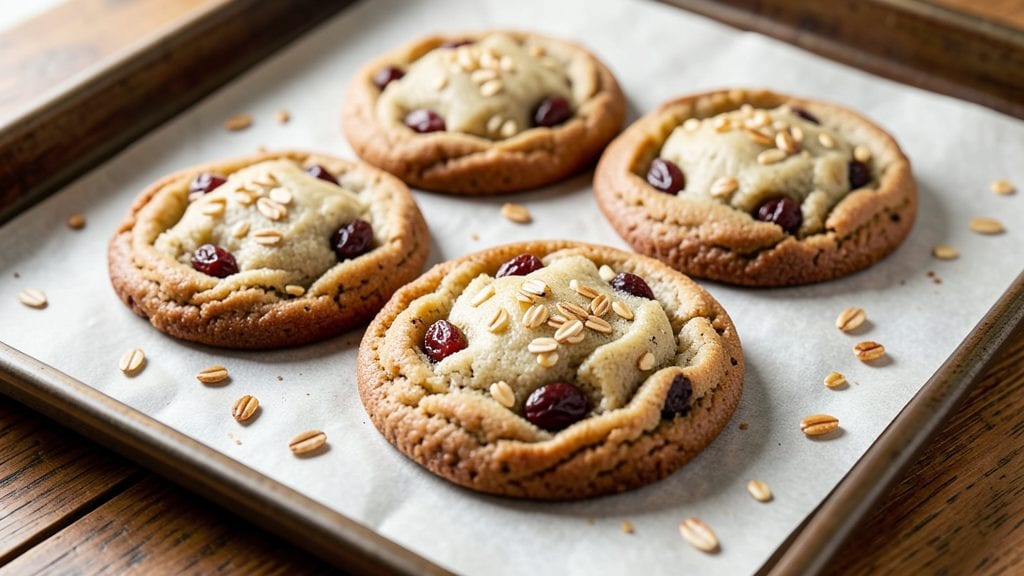
This Bisquick cookies recipe delivers the perfect oatmeal raisin crunch with minimal effort—no fancy mixing or rolling required. The secret lies in Bisquick's pre-mixed flour blend, which cuts prep time dramatically while still producing cookies with a tender interior and crispy edges.
I developed this recipe after testing countless variations to find the ideal balance of chewiness and texture.
What sets these cookies apart is their foolproof method: just combine Bisquick with butter, sugar, and eggs, then fold in oats and raisins.
The dough comes together in under 10 minutes, and baking time is a precise 12-14 minutes at 350°F. No chilling required—these cookies go straight from mixing bowl to oven, making them ideal for busy weeknights or last-minute dessert cravings.
By the time they emerge from the oven, you'll have golden-brown cookies with a satisfying crunch from the oats and chewy pockets of raisins. The aroma alone will have everyone gathering in the kitchen, and the texture—tender yet sturdy—makes them perfect for snacking or sharing.
This recipe proves you don't need complicated techniques to create cookies that taste homemade.
The beauty of this method extends beyond oatmeal raisin—swap in chocolate chips, nuts, or even dried cranberries for endless variations. Let's get baking with this simple yet impressive cookie recipe that delivers professional-quality results with minimal effort.
Ingredients for bisquick cookies
The essential ingredients for foolproof Bisquick cookies with perfect texture and minimal effort.
| Ingredient | Amount | Notes |
|---|---|---|
| Bisquick Original Flour Mix 🌾 | 1 ½ cups | Standard boxed mix, not gluten-free |
| Unsalted Butter 🧈 | ½ cup | Cold, cubed for even distribution |
| Granulated Sugar 🍚 | ½ cup | White or light brown preferred |
| Large Eggs 🥚 | 1 whole | Room temperature for even mixing |
| Old-Fashioned Rolled Oats 🥣 | 1 cup | Not instant or steel-cut |
| Raisins 🍇 | 1 cup | Plump, not dried cranberries |
| Vanilla Extract 🍯 | 1 tsp | Pure alcohol-free if preferred |
| Diamond Crystal Kosher Salt 🧂 | ½ tsp | Fine grain for even distribution |
| Ground Cinnamon 🌿 | ½ tsp | Freshly ground for aroma |
| Baking Soda 🍞 | ½ tsp | Ensures proper rise |
The Bisquick mix is the cornerstone here—Jiffy or Betty Crocker work equally well, but avoid gluten-free versions as they alter texture. For butter, Land O'Lakes or Plugrá are reliable choices, but stick with unsalted to control flavor. The oats should be rolled, not quick oats, for that satisfying crunch. Raisins? Sun-Maid or Thompson are standard, but any plump variety works. Store your Bisquick in a cool, dry place—once opened, it keeps for up to 6 months in its original packaging.
No vanilla extract? Vanilla bean paste at half the amount works beautifully. Short on cinnamon? Ground cardamom at one-third the quantity adds warmth. Substituting raisins? Chocolate chips or dried cranberries require no adjustments to the recipe. The baking soda is non-negotiable—it ensures those crispy edges. For a nutty variation, fold in chopped pecans or walnuts alongside the oats. If your kitchen lacks vanilla, a pinch of almond extract can mimic its depth.
This dough holds for up to 24 hours in the fridge, making it ideal for prepping ahead. Portion into 1.5 tablespoon scoops for uniform cookies. Baked treats keep their texture for 5 days in an airtight container, though they're best enjoyed fresh. For longer storage, freeze portions on a parchment-lined tray before transferring to a sealed bag—up to 3 months works perfectly. Reheat in a 350°F oven for 3-5 minutes to restore that just-baked aroma.
Why You'll Love This Recipe
- No Pantry Panic: I swear by this recipe when I forget to buy flour. Bisquick does all the heavy lifting—just mix, scoop, bake—and suddenly you’ve got cookies without measuring cups or sifting.
- Crunchy-Creamy Magic: That buttery Bisquick base meets chewy oats and warm sugar? It’s like a hug for your taste buds. The edges get crisp while the center stays soft—no overbaking stress.
- Packable for Anywhere: I stash these in lunchboxes, toss them in backpacks, or freeze them for road trips. They hold up better than most cookies and still taste fresh days later—no weird texture shifts.
- Budget Baked Goods: For under $5, I get a batch that feeds my family plus leftovers. No fancy ingredients, no waste—just reliable, crowd-pleasing cookies that won’t break the bank.
Step-by-step instructions for Bisquick cookies recipe
This method delivers crisp-edged, chewy oatmeal raisin cookies with minimal effort and maximum flavor.
Preheat and Prepare Mixing Tools
Preheat your oven to 375°F and line two baking sheets with parchment paper. I always use parchment to prevent sticking and ensure easy removal. While the oven heats, measure out all ingredients precisely—this recipe relies on accurate measurements for consistent texture. The 1.5 cups Bisquick Original Flour Mix should be scooped directly from the box without packing, and the 0.5 cup Unsalted Butter should remain cold and cubed to prevent overmixing later.
In a medium bowl, combine the 1 cup Old-Fashioned Rolled Oats and 1 cup Raisins. This pre-mixing step ensures even distribution throughout the dough. If your raisins are particularly dry, you can briefly soak them in warm water for 10 seconds and drain well before adding—this prevents them from absorbing too much moisture from the dough during baking.
Cream Butter and Sugar
In a separate large bowl, use a wooden spoon or rubber spatula to cut the 0.5 cup Unsalted Butter into the 0.5 cup Granulated Sugar. I prefer this method over electric mixers to maintain control and prevent overdevelopment of the gluten in the Bisquick. Work the butter and sugar together until the mixture resembles coarse crumbs with pea-sized butter pieces remaining—this texture ensures proper aeration without overworking the dough.
Add the 1 whole Large Eggs, 1 tsp Vanilla Extract, 0.5 tsp Diamond Crystal Kosher Salt, 0.5 tsp Ground Cinnamon, and 0.5 tsp Baking Soda to the butter-sugar mixture. Stir gently with a spatula until just combined—you should still see some dry ingredients scattered throughout. This careful mixing preserves the cookie's tender crumb structure while distributing flavor evenly.
Combine Wet and Dry Ingredients
Gradually add the 1.5 cups Bisquick Original Flour Mix to the wet ingredients, mixing with the spatula until the dough comes together. The dough will be slightly sticky but should hold its shape when pressed. If it feels too dry, add 1 tablespoon of water to help bind it. Avoid overmixing—just until the oat and raisin mixture is evenly incorporated throughout.
Fold in the pre-mixed oats and raisins by hand, using your hands to gently press the dough together. The dough should be soft but manageable. If it's too sticky to handle, chill it in the refrigerator for 10 minutes—this makes rolling and cutting much easier. Real talk: this step is where the texture magic happens, so don't rush it.
Shape and Bake
Divide the dough into 4 equal portions (about 3 ounces each) and roll each portion into a 1-inch thick log on your prepared baking sheets. Use a fork to gently press down on each log, creating ridges that will create that classic crisscross pattern when baked. Place the logs 2 inches apart on the sheets to allow for spreading.
Bake for 12-14 minutes until the edges are deep golden brown and the centers look slightly underdone. The cookies will continue cooking as they cool on the baking sheet. I know it seems counterintuitive, but removing them when the centers still look soft ensures they don't overbake and become dry. Let them cool on the baking sheet for 5 minutes before transferring to a wire rack to cool completely.
Serve Warm for Maximum Enjoyment
These cookies are best enjoyed warm straight from the oven. The centers should be soft and chewy with a crispy exterior, and the raisins should be plump and juicy. If you prefer a slightly firmer cookie, bake them for the full 14 minutes—but I find the slightly underdone centers create the perfect texture contrast.
Store any leftovers in an airtight container at room temperature for up to 5 days, or freeze the baked cookies for up to 3 months. The flavors actually deepen slightly as they cool, making them perfect for snacking throughout the week. This recipe delivers on its promise of quick preparation without sacrificing texture or flavor—exactly what you want from a Bisquick cookie.
Pro Tips For Making Bisquick Cookies
- Chill the Dough First: I used to skip this and wondered why my cookies spread like pancakes. Give the dough a 30-minute rest in the fridge—it firms up the butter and keeps those cookies from flattening into sad, wide discs.
- Use Cold Butter Only: No cutting corners here: scoop that butter straight from the fridge and cut it into cubes. Warm butter melts too fast, and suddenly you’ve got a greasy mess instead of chewy, buttery cookies. Trust me, the extra 2 minutes saves you from regret.
- Measure Oats by Volume: That bag of oats? Don’t eyeball it. Use a measuring cup—packed down lightly—and you’ll get the perfect crunchy texture. Too much, and your cookies turn into oatmeal cookies. Too little, and you miss the best part.
- Bake in Two Batches: Crowding the pan is a rookie move. Spread them out with at least 2 inches between cookies—they’ll puff up and brown better. Yes, it means more oven time, but underbaked cookies are a crime against dessert.
Wine and beer pairings for these flavors
Sweet Wine Pairings
These oatmeal raisin cookies have a caramelized sweetness that pairs beautifully with Moscato d'Asti from Italy—its light effervescence and floral notes complement the raisins without overpowering the cookie's texture.
I also love Riesling from Germany, particularly a semi-sweet Kabinett style, which balances the cookie's richness with its crisp acidity and hints of honey. 🍷
Creamy Beer Options
A honey brown ale like Allagash Honey Brown offers a perfect match with its malty sweetness and subtle vanilla undertones that echo the cookie's vanilla extract.
For a lighter option, try a Belgian witbier such as Hoegaarden—its citrusy coriander notes cut through the richness while enhancing the cookie's caramelized edges. 🍺
Coffee Enhancement
If you prefer coffee with your cookies, a light roast Ethiopian Yirgacheffe with its floral and tea-like notes creates a harmonious pairing. The coffee's bright acidity refreshes your palate between bites, while the cookie's chewy texture contrasts beautifully with the coffee's smooth finish.
For a bolder option, a dark roast Sumatran adds depth that stands up to the cookie's sweetness. ☕
After-Dinner Digestif
Finish your cookie experience with a sherry like Pedro Ximénez—its rich, raisin-like sweetness mirrors the cookie's dried fruit while its nutty undertones complement the oats. Alternatively, a demi-sec Champagne such as Moët & Chandon adds a celebratory touch with its crisp bubbles and citrus notes. 🥂
Non-Alcoholic Pairings
For a refreshing non-alcoholic option, try sparkling apple cider like Martinelli's—its effervescence and apple sweetness create a delightful contrast to the cookie's caramelized edges. Another great choice is vanilla chai tea with a splash of milk, which enhances the cookie's vanilla and cinnamon flavors without competing with them. 🍎
Regional Variations
In the South, where sweet tea reigns supreme, pair these cookies with a glass of sweet iced tea—the sugar content mirrors the cookie's sweetness while the tea's acidity balances the richness.
In New England, a maple syrup-infused milk (warm or cold) complements the cookie's oatmeal texture and caramelized edges beautifully. 🍁
Nutrition facts
Frequently asked questions about Bisquick cookies
Why do these cookies need to bake at 375°F instead of 350°F?
The higher temperature of 375°F ensures the edges get crispy while keeping the centers tender. Bisquick-based dough spreads quickly, so the elevated heat helps create that perfect balance between chewy centers and golden-brown edges in just 12-14 minutes. Lower temps risk underbaking or overly soft cookies.
Can I make these cookies without raisins?
Swap raisins for chocolate chips, dried cranberries, or chopped nuts like pecans. For chocolate chip, use 1 cup semi-sweet chips instead. The recipe's structure keeps the texture consistent regardless of mix-ins—just fold them in at the same stage as the oats.
What's the secret to crispy edges without overbaking?
The key is baking until edges are golden but centers still look slightly soft. Remove them when they've spread 2/3 of the way to the fork marks—this ensures they firm up as they cool. Overbaking by even 1 minute turns them dry. Let them rest 5 minutes on the sheet before transferring.
Why does the dough get sticky but not hold together?
Bisquick dough needs gentle handling—overmixing develops gluten, making it tough. If too sticky, chill for 10 minutes first. For extra binding, add 1 tablespoon of water or 1 teaspoon of milk to the dry ingredients. The dough should be soft but manageable, not wet or crumbly.
How can I tell when the cookies are fully baked?
Look for deep golden brown edges and a slight pull from the parchment when gently tugged. The centers should still have a soft, doughy appearance—they'll firm up as they cool. A toothpick inserted should come out with a few moist crumbs, not wet batter.