
Desserts
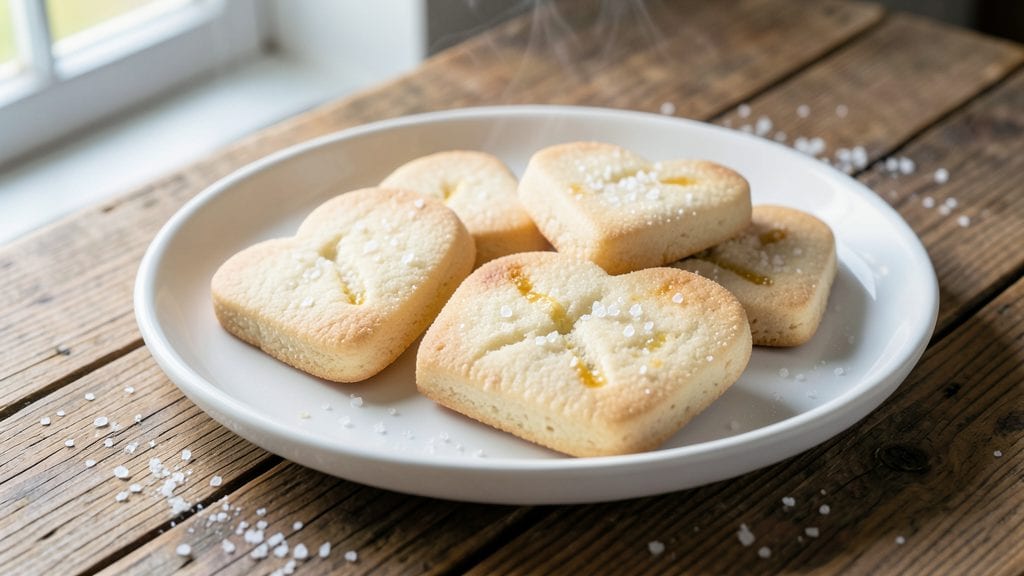
This heart shortbread cookies recipe delivers the perfect balance of buttery crunch and vanilla sweetness with a festive touch that makes them ideal for holidays or special occasions. The secret lies in precise measurements and gentle handling to maintain that signature tender yet firm texture that makes shortbread unforgettable.
I've perfected this recipe over years of baking, ensuring every bite offers that delicate melt-in-your-mouth quality with just enough vanilla infusion to elevate the flavor.
The process is simpler than you might expect, requiring just six key ingredients that work together to create these elegant cookies. You'll need cold butter for that signature crumbly texture, vanilla extract for depth, and a touch of cornstarch to prevent spreading.
The shaping technique is what transforms ordinary shortbread into heart-shaped masterpieces that look as beautiful as they taste.
By the time you pull these golden cookies from the oven, you'll have achieved that perfect balance of crisp edges and tender centers with just a hint of vanilla warmth. The edges will be delicately browned while maintaining their signature crunch, creating a texture that's impossible to resist.
These cookies stay fresh for days, making them perfect for gifting or enjoying throughout the week.
Whether you're baking for Valentine's Day, Christmas, or simply treating yourself to something special, this recipe delivers professional-quality results with minimal effort. The key is patience during the baking process—allowing them to cook slowly ensures that signature shortbread texture without burning the edges.
Let's get started on creating these festive treats that will impress everyone who tastes them.
Ingredients for heart shortbread cookies
Six ingredients, one magical texture. These heart cookies need only cold butter, vanilla, and patience for perfect crunch.
| Ingredient | Amount | Notes |
|---|---|---|
| Unsalted Butter 🧈 | 1 cup | Cold, cubed for texture |
| All-Purpose Flour 🌾 | 2 cups | Sifted for lightness |
| Granulated Sugar 🍚 | ½ cup | Fine grain preferred |
| Pure Vanilla Extract 🍯 | 1 tbsp | High-quality for flavor |
| Cornstarch 🌾 | 2 tbsp | Prevents spreading |
| Fine Sea Salt 🧂 | ½ tsp | Enhances sweetness |
| Heart-Shaped Cookie Cutter 💖 | 1 whole | For festive shape |
The butter is non-negotiable—cold, cubed butter gives that signature crumbly texture. European-style butter like Plugrá or Land O’Lakes works best if you're splurging, but regular unsalted butter from Kroger or Whole Foods does the trick too. Look for blocks, not tubs—they stay colder longer. The vanilla extract? Pure, not imitation. I grab mine from Williams Sonoma
No vanilla extract? Vanilla bean paste at double the amount works in a pinch, but trust me, it’s not the same. Short on cornstarch? Arrowroot powder at the same quantity is a decent swap. The sea salt is key—it balances the sweetness and cuts through the butter’s richness. If you’re feeling fancy, use flaky Maldon salt for a gourmet touch. For the cookie cutter, a heart-shaped one from Amazon is a game-changer, but a knife works too if you’re crafty. And if you’re making these for gifting, double the batch—they disappear fast. These cookies stay fresh for up to 5 days in an airtight container, but honestly, they’re best enjoyed within 24 hours for maximum crunch. For gifting, wrap them in parchment-lined boxes tied with ribbon—they’ll keep for up to 1 week. Freeze any extras on a tray first, then transfer to a bag for up to 3 months. Pro tip: Let them cool completely before stacking, or they’ll turn into a sad, mushy pile. Worth the wait, though—every bite is pure magic.
Why You'll Love This Recipe
- Four-Ingredient Magic: I swear, these cookies require just butter, flour, sugar, and vanilla—no fancy mix-ins or last-minute trips to the store. The cornstarch keeps them tender, but honestly? I’ve made them without it and still ended up with melt-in-your-mouth perfection.
- Butter’s Golden Touch: That rich, cold butter gets cut into the flour until it’s just crumbly enough—no overworking, no frustration. The result? A cookie with a delicate crumb and edges that stay crisp without turning tough. (Yes, even on a Tuesday night.)
- Holiday or Snack Attack: I’ve used these for Christmas gifts, school bake sales, and even as a quick dessert when I forgot to plan ahead. The heart shape makes them feel special, but the simplicity means I can bake a dozen or a hundred without stress.
- Lasts Without Losing Flavor: They keep in an airtight container for weeks—still buttery, still sweet, not a hint of dryness. And because they’re so cheap to make (seriously, less than $2 for a batch), I can afford to bake extras for guests or my own cravings.
Step-by-step instructions for heart shortbread cookies recipe
Here's how to create melt-in-your-mouth shortbread with that perfect vanilla crunch and crisp edges!
Cut and Chill the Butter for Perfect Texture
Take the 1 cup unsalted butter from the refrigerator and cut it into small cubes using a sharp knife. Place the butter cubes on a plate and refrigerate for 15 minutes to ensure they remain cold. Cold butter is essential for creating that signature shortbread crumb and preventing over-spreading during baking.
While the butter chills, sift together the 2 cups all-purpose flour, 0.5 cup granulated sugar, 2 tablespoons cornstarch, and 0.5 teaspoon fine sea salt into a medium bowl. This sifting process aerates the dry ingredients, creating a lighter texture for your cookies. I like to use a fine-mesh sieve for this step to ensure everything is evenly distributed.
Mix Cold Butter into Dry Ingredients
Add the chilled butter cubes to the sifted dry ingredients. Using your fingers or a pastry cutter, work the butter into the flour mixture until you achieve a crumbly, sand-like consistency. The butter should be evenly distributed with no large clumps remaining. This texture is crucial for creating those tender, crumbly cookies.
Once the butter is fully incorporated, add the 1 tablespoon pure vanilla extract. Mix gently with a wooden spoon or your fingers until the vanilla is evenly distributed throughout the dough. The aroma should fill your kitchen with that warm, inviting vanilla scent. This is where the magic of flavor begins!
Shape and Chill the Dough
Turn the dough onto a lightly floured surface and gently press it together to form a cohesive mass. Divide the dough into 4 equal portions (about 4 ounces each) and roll each portion into a ball. Flatten each ball slightly to create a disc about 1/4-inch thick. This thickness ensures even baking and that perfect shortbread texture.
Wrap each disc tightly in plastic wrap and refrigerate for 30 minutes. This chilling step is non-negotiable—it firms up the dough, making it easier to cut clean edges with your heart-shaped cookie cutter. The cold dough also helps maintain the shape during baking, preventing any unwanted spreading.
Cut and Bake for Crisp Edges
Preheat your oven to 325°F. Remove one disc of dough from the refrigerator and place it on a parchment-lined baking sheet. Using the heart-shaped cookie cutter, press straight down and twist slightly to cut out 4 hearts. Place the cutouts on the baking sheet, spacing them about 1 inch apart. Repeat with the remaining dough discs.
Bake for 12-15 minutes until the edges are golden brown and the centers look just slightly underbaked. The cookies should have a beautiful contrast—crisp edges with a tender, crumbly center. You'll know they're done when you can smell that buttery vanilla aroma filling your kitchen. Remove from the oven and let cool on the baking sheet for 5 minutes before transferring to a wire rack.
Pro Tips For Making Heart Shortbread Cookies
- Chill the Dough: After mixing, flatten the dough into a disk and refrigerate for at least 1 hour—preferably 2. I learned this the hard way when my first batch spread like butter on a hot pan. Cold dough holds its shape better, and the cookies stay crisp instead of turning into sad, greasy puddles.
- Pulse the Flour: Use a food processor to pulse the flour, sugar, and cornstarch together for 10 seconds. This ensures even distribution of the cornstarch (the crispy magic ingredient) and prevents lumpy dough. My grandmother swore by this, and she was right: the texture is noticeably better.
- Skip the Overmixing: Once the butter is incorporated, stop mixing as soon as the dough clumps together. Overworking it develops gluten, and your cookies will turn out tough instead of tender. I was skeptical until I tried it—now I resist the urge to "fix" the dough.
- Use Room-Temp Butter: Let the unsalted butter sit out for 30-45 minutes until soft but not melted. Cold butter creates pockets of steam, leading to dense cookies, while melted butter makes them greasy. Sounds weird, but it works: the cookies bake up lighter and crispier every time.
Common mistakes when making this dish
Overworking the Dough
Shortbread dough is delicate, and overmixing or overworking it transforms your perfect crumbly texture into a tough, dense mess. I've ruined batches by using a food processor or mixer—never use either for this recipe.
Instead, work the cold butter into the flour mixture by hand or with a pastry cutter until just combined. The moment the dough starts to clump together, stop immediately. Overworking releases gluten, which makes these cookies spread and lose their signature tenderness. 💫
Skipping the Chill
The 30-minute chill before cutting is non-negotiable for clean edges and proper shape retention. I've seen home bakers rush this step, and the results are always messy—cookies spread unevenly or collapse during baking. If your kitchen is warm, chill the dough for an extra 10-15 minutes.
The cold dough also helps prevent the butter from melting too quickly in the oven, which is what gives shortbread its signature crisp edges.
Using Warm Butter
Warm butter is the fastest way to ruin your shortbread texture. If your butter starts to soften while mixing, pop it back in the fridge for 5-10 minutes to firm up.
I've had to start over multiple times when butter melted prematurely, causing the dough to become sticky and spread uncontrollably in the oven. For best results, use butter straight from the refrigerator—never let it sit at room temperature before cutting.
The cold cubes should hold their shape when pressed between your fingers.
Overbaking for Color
Shortbread cookies are delicate, and overbaking turns them from golden perfection to dry, brittle disappointment. The moment the edges turn light golden brown (around 12-15 minutes at 325°F), they're done. I've seen bakers leave them in until dark brown, thinking they'll get "more done"—big mistake.
The centers should still look slightly underbaked. Pull them out when they smell like warm vanilla butter, not burnt toast. Let them cool completely before stacking to maintain that perfect crunch.
Wrong Oven Temperature
Shortbread is sensitive to temperature fluctuations. If your oven runs hot, the cookies will bake too quickly and burn before the centers set. I always recommend using an oven thermometer to confirm your oven's accuracy—many home ovens are off by 25°F or more.
Bake at 325°F for even, gentle cooking. If your oven tends to run hot, lower the temperature to 300°F and check for doneness at 16-18 minutes. The goal is golden edges with a tender center—not crispy all the way through.
Improper Storage After Baking
Shortbread cookies lose their crunch when exposed to moisture. I've seen bakers store them in plastic bags or airtight containers without proper preparation, leading to soggy cookies. Always let them cool completely before storing, and place parchment paper between layers in an airtight container.
For long-term storage, freeze them on a tray first, then transfer to a bag with silica gel packets to absorb moisture. Reheat in a 200°F oven for 3-5 minutes to restore crispness if they soften. 🌟
Nutrition facts
Frequently asked questions
Can I make these heart cookies without a heart-shaped cutter?
Use a round cutter and draw a heart shape with a small knife, or cut circles and decorate with icing. For a rustic look, press the dough through a heart-shaped stencil onto parchment before baking. The texture stays the same—only the shape changes!
Why did my shortbread turn out greasy?
Greasy cookies usually mean the butter melted too quickly. Keep everything cold, including your hands and work surface. Also ensure your butter is 80% fat or higher—European-style butter works best. If using salted butter, reduce the added salt to 1/4 tsp.
How do I prevent these from spreading too much?
Spread happens when butter melts too fast. Chill your dough for the full 30 minutes, use cold butter straight from fridge, and bake at 325°F (not higher). For extra insurance, flatten dough discs to 1/4-inch thickness and press cutter straight down without twisting.
Can I add chocolate chips or nuts?
While traditional shortbread avoids mix-ins, you can add mini chocolate chips (1/4 cup max) or toasted hazelnuts (1/3 cup, chopped). Fold them in after mixing dry ingredients, but don't overdo it—shortbread's magic comes from its simple, buttery texture.
How long should I bake them for perfect doneness?
Bake for 12-15 minutes at 325°F until edges are golden but centers remain slightly soft. Overbaking = dry cookies! Test by gently pressing a cookie—it should hold its shape but still feel tender. The aroma should smell like warm vanilla butter, not burnt toast.