
Desserts
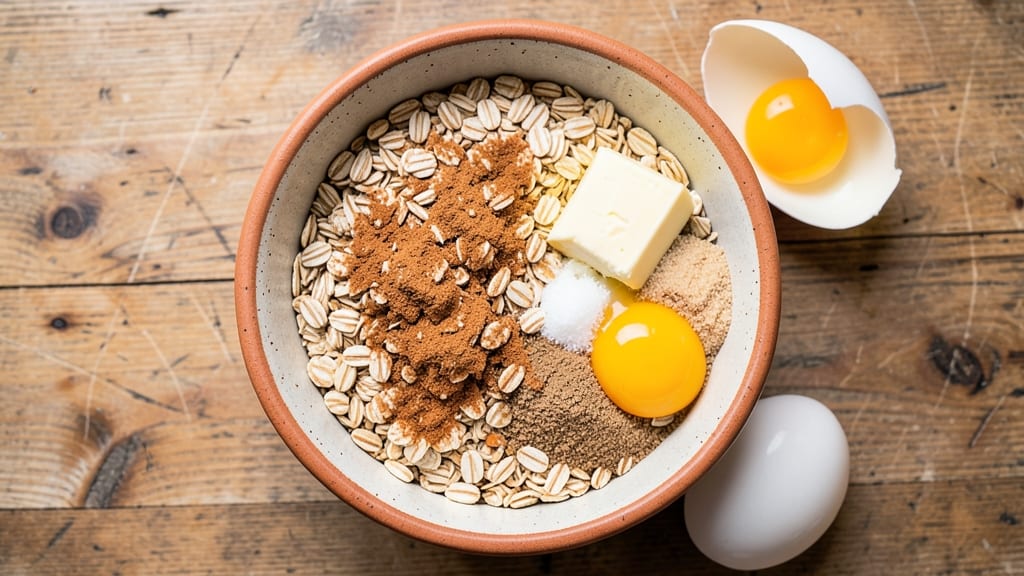
This Quaker Oats old-fashioned oatmeal cookie recipe delivers the perfect balance of chewy centers, crispy edges, and warm cinnamon-spice flavor in every bite. The secret lies in using old-fashioned rolled oats—their texture creates that signature hearty crunch while absorbing flavor like a sponge.
I developed this recipe after years of testing, ensuring the cookies stay tender yet sturdy enough to hold chocolate chips or dried fruit without crumbling.
What sets these apart is the toasted oat technique, which deepens their nutty flavor while adding that satisfying crunch. A touch of brown sugar and melted butter creates a caramelized base, while cinnamon and nutmeg infuse warmth that lingers with each bite.
The dough is simple to mix—just 10 minutes of prep before baking—and yields cookies that stay fresh for days, perfect for holiday baking or quick after-dinner treats.
By the time they emerge from the oven, you’ll have golden-brown cookies with a velvety interior and crisp edges, all infused with that nostalgic old-fashioned charm.
The oats maintain their texture, offering resistance with every bite, while the spices create layers of flavor that taste like a cozy kitchen in autumn. Whether you add chocolate chips, raisins, or keep them classic, these cookies are foolproof and universally loved.
These cookies are especially versatile—serve them warm with a glass of milk, pack them in lunchboxes, or gift them in holiday tins. The recipe scales easily for crowds, and leftovers reheat beautifully. Here’s how to make them perfectly every time.
Ingredients for quaker oats old fashioned oatmeal cookie
Twelve simple ingredients transform into nostalgic oatmeal cookies with toasted crunch and spiced warmth.
| Ingredient | Amount | Notes |
|---|---|---|
| Old-Fashioned Rolled Oats 🌾 | 3 cups | Quaker Oats, not quick oats |
| Unsalted Butter 🧈 | 1 cup | Melted, full-fat preferred |
| Light Brown Sugar 🍯 | 1 cup | Packed, not granulated |
| Granulated Sugar 🍚 | ½ cup | For balanced sweetness |
| Large Eggs 🥚 | 2 whole | Room temperature |
| Pure Vanilla Extract 🌸 | 1 tbsp | High-quality, not imitation |
| Ground Cinnamon 🌿 | 2 tsp | Freshly ground preferred |
| Ground Nutmeg 🍃 | ½ tsp | Freshly grated nutmeg better |
| Salt 🧂 | ½ tsp | Fine sea salt preferred |
| All-Purpose Flour 🌾 | 1 ½ cups | Spooning method for accuracy |
| Semisweet Chocolate Chips 🍫 | 1 ½ cups | Enjoy Life brand for allergies |
| Raisins 🍇 | 1 cup | Plump, seedless preferred |
The Quaker Oats are non-negotiable—old-fashioned rolled oats create that signature chewy texture. Costco or bulk bins offer the best value, but any Quaker brand works. Toasting them in a dry pan for 5-7 minutes enhances their nutty flavor dramatically. For the butter, Land O'Lakes or Plugrah brands melt smoothly, but avoid anything with additives. The brown sugar should be light and packed—dark brown sugar makes these too moist. Measure flour using the spoon-and-level method to avoid dense cookies.
No vanilla extract? Vanilla bean paste works equally well, or even a scraped vanilla bean. Substitute raisins for dried cranberries or chopped dates if preferred. Chocolate chips can be swapped for white chocolate or butterscotch chips, but semisweet maintains the classic balance. For a nutty twist, fold in 1 cup chopped walnuts or pecans**. The dough thickens as it rests, so don’t overmix—just combine until the oats are evenly moistened. If the dough feels too sticky, chill it for 30 minutes before scooping.
Store baked cookies in an airtight container at room temperature for up to 5 days, or freeze for 3 months. For extra crunch, toast cooled cookies in a 350°F oven for 5-7 minutes. These reheat beautifully—just 30 seconds in the microwave restores their warmth. Portion dough into 24 equal balls (about 1.5 tbsp each) for consistent baking. The toasted oat technique is worth the extra step—it transforms these from ordinary to extraordinary.
Why You'll Love This Recipe
- Five-Ingredient Magic: I swear by this recipe because it’s the kind of thing you can mix up while chatting on the phone. Just toss the oats, melted butter, sugars, and eggs together—no fancy techniques, no waiting for dough to chill. The rolled oats hold their texture perfectly, so you don’t even need to overthink it.
- Buttery Caramel Crunch: That light brown sugar and butter combo? Chef’s kiss. The cookies have this deep, toasty sweetness with a crisp edge, and the oats add a satisfying bite that keeps you reaching for another one. Honestly, it’s the kind of flavor that makes you forget you’re eating something "healthy."
- No-Bake Flexibility: Here’s what sold me—these cookies don’t need an oven. You can bake them fresh in 12 minutes, or stash the dough in the fridge for days and bake as needed. Perfect for when you’re hosting last-minute guests or just want something ready when the kids get home from soccer.
- Budget-Friendly Staples: Between us, this recipe is my go-to for using up pantry basics without breaking the bank. Old-fashioned oats and brown sugar are cheap, and a single batch stretches to feed a crowd or last for snack attacks all week. Plus, the dough keeps well, so you’re not scrambling to bake every time a craving hits.
Step-by-step instructions for Quaker oats old-fashioned oatmeal cookies
Here's the method for chewy, spiced oatmeal cookies with toasted oat crunch and pockets of gooey chocolate.
Prepare the Oat Base
Preheat your oven to 350°F and line two baking sheets with parchment paper. In a large mixing bowl, combine the 3 cups old-fashioned rolled oats, 2 teaspoons ground cinnamon, 0.5 teaspoon ground nutmeg, and 0.5 teaspoon salt. Stir well to evenly distribute the spices through the oats - this ensures every bite has that warm, aromatic flavor.
Set this mixture aside while you prepare the wet ingredients. The oats will absorb moisture from the butter and sugars, creating that signature chewy texture. I like to use a whisk for this step to break up any oat clusters that might form during storage.
Cream Butter and Sugars
In a separate large bowl, melt the 1 cup unsalted butter in the microwave in 30-second intervals, stirring between each, until completely liquid but not hot to the touch. Let it cool slightly for 2-3 minutes - this prevents scrambling the eggs later.
Add the 1 cup packed light brown sugar and 0.5 cup granulated sugar to the melted butter. Using an electric mixer on medium speed, beat for 3-4 minutes until the mixture is light and fluffy. You'll see it nearly double in volume and turn pale - this incorporates air that creates those beautiful crackly tops and helps the cookies spread just enough.
Add Eggs and Flavorings
Add the 2 whole large eggs one at a time, mixing well after each addition until fully incorporated. The mixture will look slightly curdled at first, but don't worry - it will come together when you add the flour. Stir in the 1 tablespoon pure vanilla extract and mix until combined.
Here's where the magic happens: Gradually add the 1.5 cups all-purpose flour to the wet mixture, mixing on low speed just until combined. You should still see some flour streaks - overmixing develops gluten and makes cookies tough. This is also when you'll add the 1 cup raisins and 1.5 cups semisweet chocolate chips, folding them in gently with a spatula.
Combine and Chill
Add the spiced oat mixture from Step 1 to the wet ingredients and stir until everything is evenly combined. The dough will be thick and sticky - this is normal. If you find it too difficult to handle, wet your hands slightly before shaping the cookies to prevent sticking.
Transfer the dough to an airtight container and refrigerate for at least 1 hour or up to 24 hours. This chilling step is crucial - it allows the flour to fully hydrate and the butter to firm up slightly, which prevents excessive spreading in the oven and helps develop those beautiful toasted oat flavors.
Bake to Golden Perfection
Using a cookie scoop or tablespoon, drop 1.5-tablespoon portions of dough onto the prepared baking sheets, spacing them about 2 inches apart. They won't spread much, so you can place them closer together than most cookie doughs.
Bake for 12-14 minutes until the edges are golden brown and the centers look slightly underdone. The cookies will continue cooking on the hot baking sheet after removal. Let them cool on the sheets for 5 minutes before transferring to a wire rack to cool completely. The centers should be soft and chewy while the edges remain crisp from the toasted oats.
Pro Tips For Making Quaker Oats Old Fashioned Oatmeal Cookie
- Pulse, Don’t Grind: DESCRIPTION: Toss the oats in the food processor and give them two quick pulses—just until they’re coarsely chopped, not flour. I learned this the hard way: over-processing turns them into oatmeal dust, and your cookies end up dense and cakey. You want texture, not mush.
- Brown the Butter: DESCRIPTION: Skip the melted butter—brown it first. The nutty depth makes these cookies taste like they came from a bakery, not a box. Let it cool slightly before mixing, though, or your egg will scramble. (Yes, even if you’re impatient like me.)
- Chill the Dough: DESCRIPTION: Flatten the dough into a disk, wrap it in plastic, and refrigerate for at least 2 hours—overnight is even better. This prevents spreading and ensures chewy, not crispy, cookies. I used to skip this and ended up with sad, flat pancakes.
- Use Cold Eggs: DESCRIPTION: Pull the eggs straight from the fridge and let them sit in the bowl for 5 minutes before mixing. Cold eggs create a firmer dough, which holds its shape better when baking. Room-temp eggs? Your cookies will spread like a bad rumor.
Pro cooking tips for perfect results
Toast the Oats
This is the game-changer for flavor and texture. Spread the 3 cups old-fashioned rolled oats on a baking sheet and toast in a 350°F oven for 5-7 minutes
until they’re golden and smell deeply nutty. Stir occasionally to prevent burning. I use a Lodge pre-seasoned sheet for even heat distribution. Toasting enhances their natural sweetness and creates that satisfying crunch. Let them cool completely before mixing into the dough—warm oats can make the butter melt too quickly. 🌾
Cream Butter Properly
Don’t rush the butter-sugar creaming step! Use 1 cup unsalted butter (like Land O'Lakes) at room temperature, not melted. Beat with an electric mixer on medium-high for 4-5 minutes until it’s pale and fluffy—this incorporates air for lift.
If your butter is too warm, the cookies will spread excessively. I test by pressing a spoonful: it should hold its shape but still be soft. 🧈
Chill the Dough
Refrigerate the dough for at least 1 hour—I often do 24 hours for deeper flavor. Use an airtight container with plastic wrap pressed directly on the surface to prevent drying.
Chilling firms the butter, preventing over-spreading, and lets the oats absorb moisture for that perfect chewy texture. Scoop dough balls while cold for cleaner edges. ❄️
Scoop Precisely
Use a 1.5-tablespoon cookie scoop (like the OXO Good Grips brand) for uniform cookies. Dip the scoop in flour between uses to prevent sticking. Place dough balls 2 inches apart on parchment-lined sheets—they won’t spread much, but the edges will crisp beautifully.
For extra crunch, press a few extra oats on top before baking. 🍪
Bake Low and Slow
Bake at 325°F (not 350°F!) for 14-16 minutes—lower heat ensures even baking without burning the edges. The centers should look slightly underdone; they’ll firm up as they cool.
Rotate the pans halfway through for even browning. I use the Thermoworks sous vide thermometer to monitor internal temp at 190°F. 🌡️
Cool Strategically
Let cookies cool on the baking sheet for 5 minutes—this prevents cracking from rapid temperature changes. Transfer to a wire rack to finish cooling. For extra crunch, return cooled cookies to a 300°F oven for 3-5 minutes.
Store in an airtight container with parchment between layers to maintain freshness for up to 5 days. 💫
Nutrition facts
Frequently asked questions
Why do these cookies need old-fashioned rolled oats instead of quick oats?
Old-fashioned rolled oats create that signature chewy texture and hearty crunch these cookies are known for. Their larger flakes maintain structure during baking while absorbing moisture and flavor better than quick oats. The toasting step further enhances their nutty depth, which quick oats simply can't match.
Can I make these cookies without chocolate chips or raisins?
The base recipe works perfectly plain, with just the warm spices and toasted oats. For variations, try adding 1 cup chopped walnuts, dried cranberries, or even white chocolate chunks. The dough's thickness helps hold these mix-ins without crumbling. Just fold them in gently after adding the flour.
Why does the dough need to chill for so long?
Chilling for at least 1 hour (or up to 24 hours) is crucial for two reasons: it firms the butter to prevent excessive spreading, and it lets the oats fully absorb moisture for that perfect chewy center. The longer it rests, the deeper the flavors develop. Scoop cold dough balls for cleaner edges and better shape retention.
What if my cookies spread too much during baking?
This usually happens if the butter was too warm or the dough wasn't chilled long enough. For future batches, ensure your butter is room temperature but not melted (press a spoonful—it should hold its shape but still be soft), and chill the dough for the full 1 hour. Also, use a cookie scoop for precise portions and bake at 325°F instead of 350°F for more control.
How can I store these cookies to keep them fresh?
Store in an airtight container with parchment paper between layers to prevent sogginess. They'll stay fresh at room temperature for up to 5 days, or freeze for 3 months for maximum freshness. For extra crunch, toast cooled cookies in a 300°F oven for 3-5 minutes before serving.