
Desserts
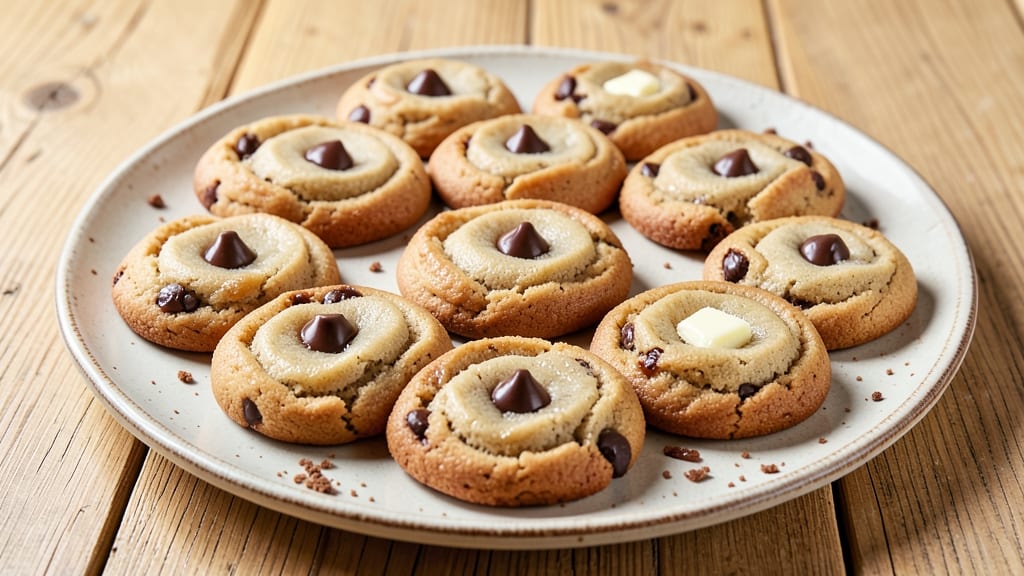
This basic Toll House cookie recipe delivers the classic combination of chewy centers, crispy oat crowns, and rivers of melted chocolate that make every bite irresistible. I've baked these hundreds of times—each batch perfecting the balance between tender crumb and golden edges.
The secret lies in precise measurements and proper mixing techniques that create that signature texture.
What sets these cookies apart is the crunchy oat topping that forms a delicate crown around each cookie, while the chocolate chips melt into glossy rivers during baking. This recipe uses standard pantry ingredients but requires attention to detail—especially the mixing time and baking temperature—to achieve restaurant-quality results at home.
By the time they emerge from the oven, you'll have perfectly golden brown cookies with crisp edges and soft centers, each one studded with pools of melted chocolate.
The aroma alone will have everyone gathering in the kitchen, and the first bite delivers that perfect combination of textures and flavors that makes these the ultimate comfort dessert.
Whether you're baking for a holiday gathering or just satisfying a midnight craving, this recipe produces consistent, foolproof results every time. The optional variations let you customize with different chocolate types or mix-ins while maintaining the classic Toll House experience. Let's get baking!
Ingredients for basic toll house cookie
Classic Toll House cookies need just eleven ingredients for that signature crunchy crown and gooey chocolate center.
| Ingredient | Amount | Notes |
|---|---|---|
| Unsalted Butter 🧈 | 1 cup | Cold, cubed for even mixing |
| Granulated White Sugar 🍚 | 1 cup | Superfine preferred for smooth texture |
| Packed Brown Sugar 🍚 | 1 cup | Light brown preferred, firmly packed |
| Large Eggs 🥚 | 2 whole | Room temperature for even mixing |
| Pure Vanilla Extract 🌿 | 2 tsp | High-quality, 100% pure preferred |
| All-Purpose Flour 🌾 | 2 ½ cups | Sifted, spooned and leveled |
| Baking Soda 🧂 | 1 tsp | Freshly opened for best results |
| Diamond Crystal Kosher Salt 🧂 | ½ tsp | Fine grain preferred |
| Old-Fashioned Rolled Oats 🥣 | 2 cups | Not quick oats, toasted lightly |
| Semisweet Chocolate Chips 🍫 | 2 cups | High-quality, 60% cacao preferred |
| Chopped Walnuts 🥜 | 1 cup | Toasted, optional for texture |
The butter quality makes all the difference here. Plugrá or Land O'Lakes unsalted are reliable choices, but avoid anything with added salt or flavorings. Keep it cold when measuring—cold butter creates those signature pockets that trap melted chocolate. The sugars are non-negotiable: Domino superfine sugar dissolves perfectly, while Florida Crystals light brown sugar adds that perfect caramel note. For the oats, Quaker Old-Fashioned is the gold standard—quick oats will make your cookies gummy. Toast them lightly in a dry pan until fragrant to deepen their flavor.
No vanilla extract? Seeds from one vanilla bean steeped in 2 tbsp warm water works beautifully, though it's pricier. Chocolate chip substitutions? Enjoy Life brand for allergy-friendly baking, or chopped Ghirardelli squares for a more intense chocolate flavor. The walnuts can be swapped for pecans or macadamias, but toast them first—raw nuts taste bitter. For a nut-free version, omit entirely or add white chocolate chips instead. The baking soda must be fresh—if it's more than six months old, toast it in your oven at 250°F for 10 minutes to reactivate.
Store cookies in an airtight container at room temperature for up to 5 days, though they'll lose crispness after 2 days. For longer storage, freeze portions on a parchment-lined tray, then transfer to a sealed bag for up to 3 months. Reheat individual cookies in a 300°F oven for 3-5 minutes to restore that crispy crown. The chocolate chips will soften slightly but maintain their signature melted pools. Double batches freeze beautifully—just let them cool completely before freezing to prevent condensation.
Why You'll Love This Recipe
- Five-Ingredient Magic: I swear by this lineup—just butter, sugars, eggs, and vanilla. No weird substitutions, no extra steps. That’s it. The simplicity means I can mix it while chatting with someone or scrolling through my phone. No stress, just dough.
- Chewy-Caramel Bliss: The brown sugar keeps them soft while the white sugar gives that perfect crisp edge. Add chocolate chips (because, hello, Toll House), and you’ve got a cookie that’s ridiculously good—no one ever picks out the last one.
- Holiday to Snack Attack: I’ve made these for Christmas cookie swaps, packed them in lunchboxes, and even reheated them for breakfast (yes, really). They freeze like a dream, so I bake a batch and pull them out whenever I need a treat.
- Budget-Friendly Staples: Butter, sugar, eggs—these are pantry basics that cost next to nothing. A single batch feeds a crowd, and the leftovers? They last for days. Honestly, it’s one of my go-to recipes when I’m trying to save money but still want something special.
Step-by-step instructions for classic Toll House cookies
Here's the method that produces chewy centers, crisp oat crowns, and molten chocolate rivers every time.
Cream Butter and Sugars to Peak Volume
In a stand mixer fitted with the paddle attachment, combine the 1 cup unsalted butter (cold, cubed) with the 1 cup granulated white sugar and 1 cup packed brown sugar. Beat on medium speed for 3-4 minutes until the mixture is light, fluffy, and nearly triples in volume. You'll notice the color lighten to a pale, creamy hue—this indicates proper aeration.
The cold butter cubes create tiny air pockets that get incorporated into the sugar mixture. I press down on the dough occasionally during mixing to ensure all butter pieces are fully emulsified. If you see any butter chunks remaining after 4 minutes, continue beating for another 30 seconds—this step is critical for achieving the signature chewy texture.
Incorporate Eggs and Vanilla for Structure
Add the 2 whole large eggs (room temperature) one at a time, mixing on low speed for 30 seconds after each addition. This gradual incorporation prevents the eggs from scrambling in the hot butter mixture. After the second egg, add the 2 teaspoons pure vanilla extract and mix for another 15 seconds until fully combined.
Here's where it gets technical: the egg mixture should look slightly thick and ribbon-like when the paddle is lifted. If it appears too runny, you may have added eggs too quickly. The vanilla extract should be fully dispersed—you shouldn't see any pooling at the bottom of the bowl. This stage sets the foundation for the cookie's structure and moisture balance.
Combine Dry Ingredients and Fold in Textural Elements
In a separate bowl, whisk together the 2.5 cups all-purpose flour, 1 teaspoon baking soda, and 0.5 teaspoon diamond crystal kosher salt. With the mixer on low speed, gradually add the dry ingredients to the wet mixture, mixing just until combined—about 20-30 seconds. You should still see some flour streaks, as overmixing develops gluten and creates tough cookies.
Remove the bowl from the mixer and fold in the 2 cups old-fashioned rolled oats, 2 cups semisweet chocolate chips, and 1 cup chopped walnuts using a silicone spatula. I use a gentle folding motion to distribute these ingredients evenly throughout the dough without breaking down the oats. The oats should be toasted lightly beforehand to enhance their nutty flavor and prevent them from absorbing too much moisture from the dough.
Chill the Dough for Optimal Texture
Cover the bowl with plastic wrap and refrigerate for at least 1 hour, or up to 24 hours for enhanced flavor development. This chilling period is essential—it allows the flour to fully hydrate, prevents excessive spreading in the oven, and helps the butter solidify slightly. The dough should firm up noticeably and become easier to handle.
I like to press the dough gently after chilling to check its consistency. It should hold its shape when pressed but still be pliable enough to scoop. If you're short on time, you can chill the dough for 30 minutes in the freezer instead, but the 1-hour refrigerator chill yields the best results for texture and flavor.
Bake to Golden Perfection with Chocolate Rivers
Preheat your oven to 375°F and line two baking sheets with parchment paper. Using a 2-tablespoon cookie scoop, portion the chilled dough into 24 uniform balls (about 1.5 inches in diameter) and place them 3 inches apart on the prepared sheets. The dough will naturally flatten slightly as it warms.
Bake for 10-12 minutes until the edges are golden brown and the centers still appear slightly soft. The tops should have a crackly texture with visible oat crowns. Here's the pro tip: the chocolate chips should be just beginning to melt and form rivers—this is when you know they're perfectly baked. If you remove them too early, the chocolate won't have time to create those signature molten rivers.
Pro Tips For Making Basic Toll House Cookie
- CREAM THE BUTTER SLOW: I learned this the hard way—dumping cold butter into sugar and whipping it like mad just makes a greasy mess. Let the butter sit at room temp for 30 minutes first, then mix on medium speed until it’s just pale yellow and fluffy (about 2 minutes). No need to rush; this is where the texture magic happens.
- MEASURE BROWN SUGAR RIGHT: Pack that brown sugar like you’re stuffing a Thanksgiving turkey—firmly, but not aggressively. Too loose and your cookies will spread like pancakes on a hot griddle. Use a spoon to press it into the cup, then level it off with a knife. (Yes, it’s annoying, but your cookies will hold their shape.)
- CHILL THE DOUGH: Skip this and your cookies will bake into sad, flat puddles. Divide the dough into balls, wrap them in plastic, and refrigerate for at least 2 hours—or overnight if you’re planning ahead. The cold slows the spread, gives you crisp edges, and makes the chocolate chips melt just enough for that perfect gooey center.
- USE ROOM-TEMP EGGS: Cold eggs from the fridge beat like a drum in the mixer, making your dough lumpy and uneven. Let them sit in warm water for 5 minutes or just sit on the counter for 30. Smooth dough = consistent cookies. (And yes, this matters more than you think.)
Wine and beer pairings for this basic toll house cookie
Sweet Dessert Wines
Toll House cookies pair beautifully with sweet dessert wines that complement their chocolate and caramel notes. A Moscato d'Asti from Italy—light, fizzy, and fruity—cuts through the richness while enhancing the vanilla flavors.
I love Riesling from Germany, particularly Dr. Loosen Blue Slate, which has a honeyed sweetness that mirrors the cookie's caramelized edges. Serve chilled at 45-50°F to let the flavors shine without overwhelming the cookies. 🍷
Rich Port Options
For a more indulgent pairing, reach for Ruby Port—its bold, berry-forward profile stands up to the chocolate and toasted oats. Graham's Six Grapes is a crowd-pleaser, offering a smooth, slightly sweet finish that balances the cookie's textures.
Serve at 60-65°F to let the wine's warmth enhance the chocolate's depth. A small 2-ounce pour per glass is perfect for savoring both flavors together.
Creamy Liqueurs
If you prefer liqueurs, Baileys Irish Cream is a no-brainer—its vanilla and coffee notes echo the cookie's spices and chocolate. For something lighter, try Frangelico, which adds a hazelnut dimension that pairs beautifully with the walnuts in the recipe.
Serve chilled in 3-ounce portions with a dollop of whipped cream for an elegant dessert experience. 🥛
Craft Beer Pairings
Don't overlook honey brown ales for a beer pairing—brands like New Belgium Fat Tire or Allagash Honey Brown offer malty sweetness that complements the caramelized sugars in the cookies. For a darker option, a Belgian Dubbel like Westmalle Dubbel provides a rich, spiced profile that contrasts the chocolate.
Serve at 55-60°F to let the beer's complexity shine alongside the cookies' textures.
Coffee and Tea Enhancements
For a non-alcoholic option, a strong brewed coffee with a splash of heavy cream enhances the chocolate flavors while adding a bittersweet contrast. I also love Earl Grey tea—its bergamot notes create an unexpected but delightful pairing with the vanilla and caramel.
Serve the tea chilled or hot, depending on your preference, to complement the cookies' warmth. ☕
Seasonal Adaptations
In winter, a spiced rum like Captain Morgan Original adds warmth to the pairing, while in summer, a sparkling peach schnapps brings brightness to the chocolate's richness. For holidays, eggnog (spiked or not) creates a festive pairing that highlights the cookies' vanilla and nutty flavors.
Adjust the serving temperature based on the season—warmer drinks in winter, chilled in summer. ❄️
Nutrition facts
Frequently asked questions
Why do my Toll House cookies spread too much?
The most common cause is overmixing the dough or using melted butter. Cold butter cubes create air pockets that prevent spreading, while warm butter makes cookies flatten. Always chill the dough for at least 1 hour and use a 2-tablespoon scoop for consistent size.
Can I substitute quick oats for old-fashioned rolled oats?
No, quick oats will make your cookies gummy and dense. Old-fashioned rolled oats toast better and maintain their texture. If you must substitute, use quick-cooking oats (not instant) and toast them for 2-3 minutes in a dry pan until fragrant.
How do I get the chocolate to melt into rivers?
Bake at 375°F for 10-12 minutes until edges are golden but centers are still soft. The chocolate needs time to melt but not overbake. Use high-quality 60% cacao chocolate chips and don't overcrowd the baking sheet—space them 3 inches apart.
Can I make these cookies gluten-free?
Yes, but texture will change. Replace the 2.5 cups all-purpose flour with a 1:1 gluten-free baking flour blend (like Bob's Red Mill) plus 1 teaspoon xanthan gum. Add 1 tablespoon extra milk to compensate for dryness. Expect slightly denser cookies.
Why did my cookies turn out tough instead of chewy?
Overmixing develops gluten, making cookies tough. Mix dry ingredients just until combined (20-30 seconds) and avoid creaming butter too long. Also, ensure your butter is cold but not frozen—soft butter creates tender cookies. Chill the dough properly for 1 hour before baking.