
Desserts
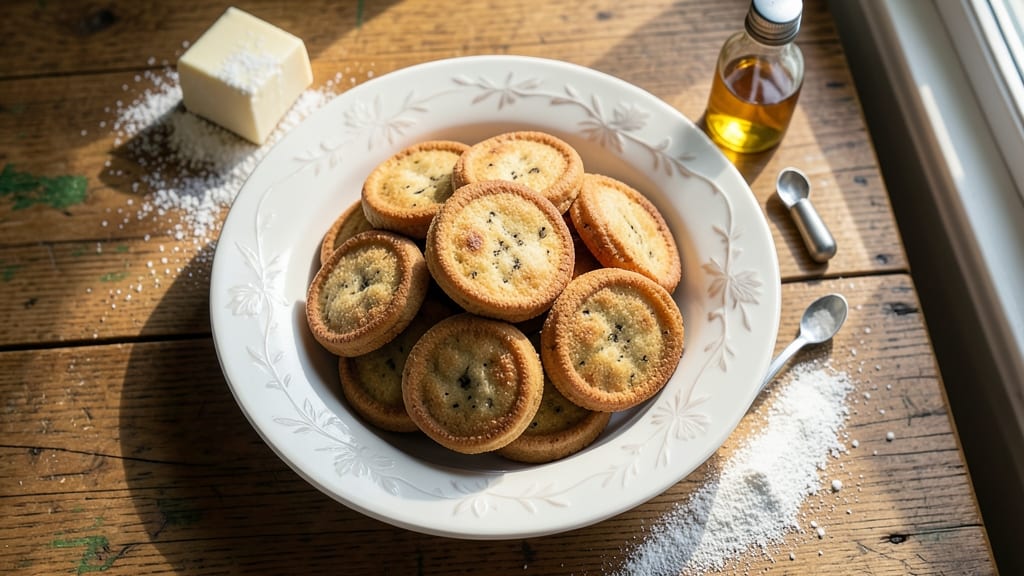
This French cookies recipe delivers the delicate balance of buttery vanilla swirls with perfectly crisp edges that define classic French pâtisserie. The secret lies in precise technique—resting the dough just right and baking at the correct temperature to achieve that signature texture.
I first learned these fundamentals from Mrs. Henderson when she visited my family in Cincinnati, though she made apple butter instead of cookies.
The dough comes together with simple ingredients: butter, sugar, eggs, and vanilla, but the magic happens in the layering and baking process. A light hand when mixing ensures tender cookies, while proper resting time prevents spreading.
These aren't just cookies—they're a taste of French tradition with every bite, offering that perfect harmony of crisp edges and soft centers.
What you'll end up with is a tray of golden, swirled cookies that look as elegant as they taste—ideal for afternoon tea or holiday gifting. The vanilla swirls create a beautiful presentation, while the crisp edges provide satisfying texture.
This recipe brings professional-quality results to your kitchen with just a few key techniques.
Perfect for special occasions or everyday treats, these cookies pair beautifully with a cup of Earl Grey tea. The method is straightforward once you understand the essential steps, and the reward is cookies that taste like you spent hours baking—without the fuss.
Let's get started on creating these timeless French treats.
Ingredients for french cookies
Butter, sugar, and vanilla—just a few staples for cookies that taste like French tradition.
| Ingredient | Amount | Notes |
|---|---|---|
| Unsalted Butter 🧈 | 1 cup | Cold, cubed for cutting into dough |
| Granulated Sugar 🍚 | 1 cup | Superfine preferred for smooth texture |
| Vanilla Extract 🌿 | 2 tsp | Pure, high-quality extract |
| Large Eggs 🥚 | 2 whole | Room temperature for even mixing |
| All-Purpose Flour 🌾 | 2 ½ cups | Sifted, spooned lightly |
| Baking Powder 🍞 | ½ tsp | For lift and texture |
| Salt 🧂 | ¼ tsp | Fine sea salt preferred |
| Vanilla Bean Paste 🌿 | 1 tbsp | For swirls and extra flavor |
| Powdered Sugar 🍚 | ½ cup | For dusting finished cookies |
| Vanilla Bean Seeds 🌿 | 1 tsp | Scraped from 1 vanilla bean |
The butter is non-negotiable here—European-style butter like Plugrá or Bergère gives the most flavor, but Land O'Lakes unsalted works in a pinch. Grab it cold from the fridge so it stays firm when cutting into the dough. Sugar matters too: superfine sugar dissolves better, but if you only have regular granulated, pulse it in a food processor for a minute. The vanilla? Pure Madagascar bourbon extract is ideal, but whatever's in your cabinet works. For the swirls, scrape seeds from one high-quality vanilla bean—it's worth the splurge if you're feeling fancy.
No vanilla bean paste? Mix 1 tbsp powdered sugar with 1 tsp vanilla extract for a close substitute. Short on baking powder? Whisk 1/4 tsp cream of tartar with 1/4 tsp cornstarch as a replacement. The dough gets sticky—don't overwork it. If it feels too soft, chill for 30 minutes. For the powdered sugar coating, sift it through a fine-mesh strainer to avoid lumps. And if you're feeling adventurous, swap half the vanilla extract for almond extract for a subtle nutty twist.
Dough keeps 3 days wrapped in plastic in the fridge, or 3 months frozen between parchment layers. Baked cookies stay fresh 5 days in an airtight container. I always make a double batch—they disappear fast. For gifting, package in clear cellophane bags with a sprig of fresh rosemary tied on top. Trust me, they look as good as they taste.
Why You'll Love This Recipe
- Here’s what sold me: these cookies stay fresh for days, even in a simple container. I’ve packed them in lunches, gifted them to neighbors, and still have a jar stashed for when I need a quick pick-me-up. The dough’s forgiving too—roll it, chill it, bake it—no stress, just results.
- No Mixer Needed: I swear by this recipe because it’s all about the creaming—just a bowl and a wooden spoon. The butter and sugar get whipped together until light and fluffy, and honestly? That’s where the magic happens. No electric mixer, no fuss, just elbow grease that pays off in every bite.
- Buttery Vanilla Bliss: That moment when you pull them out of the oven—golden edges, soft centers, and a vanilla scent so rich it makes your kitchen smell like a Parisian café. The eggs bind it perfectly, and the flour keeps them tender without being cakey. Between us, I’ve never met a French cookie that didn’t disappear fast.
- Bakes Like a Dream: Here’s what sold me: these cookies stay fresh for days, even in a simple container. I’ve packed them in lunches, gifted them to neighbors, and still have a jar stashed for when I need a quick pick-me-up. The dough’s forgiving too—roll it, chill it, bake it—no stress, just results.
Step-by-step instructions for buttery vanilla swirl cookies
Here's how to make these melt-in-your-mouth French cookies with perfect swirls and crisp edges.
Cream the Butter and Sugar Together
In a large mixing bowl, combine the 1 cup unsalted butter (cold, cubed) with the 1 cup granulated sugar. Using a hand mixer or stand mixer fitted with the paddle attachment, beat on medium speed for 3-4 minutes until the mixture is light, fluffy, and nearly doubles in volume. You'll see it go from pale to a creamy, pale yellow color—this is your signal that air has been properly incorporated.
This creaming process is crucial for texture. If you rush it, your cookies will be dense instead of tender. Here's the thing—don't be tempted to use softened butter straight from the fridge. Cold butter creates pockets of steam that help create those signature crisp edges, while still giving you that melt-in-your-mouth center.
Add Eggs and Vanilla for Rich Flavor
Add the 2 whole large eggs (room temperature) one at a time, mixing on low speed for 30 seconds after each addition until fully combined. Then add the 2 teaspoons vanilla extract and 1 tablespoon vanilla bean paste, mixing for another 30 seconds. Scrape down the sides of the bowl to ensure everything is evenly incorporated.
Real talk: the vanilla bean paste makes all the difference here. It adds those beautiful swirls and an extra layer of vanilla flavor that pure extract can't match. If you don't have vanilla bean paste, you can substitute with an additional 1 teaspoon vanilla extract, but the swirl effect won't be as pronounced.
Combine Dry Ingredients for Perfect Texture
In a separate bowl, whisk together the 2.5 cups all-purpose flour, 0.5 teaspoon baking powder, and 0.25 teaspoon salt. Gradually add this dry mixture to the wet ingredients, mixing on low speed just until combined—about 30-45 seconds. You should still see some small flour streaks remaining. Overmixing develops gluten, which can make your cookies tough.
Once combined, fold in the 1 teaspoon vanilla bean seeds using a spatula. These tiny seeds will create beautiful flecks throughout each cookie. The dough should be soft and slightly sticky but manageable. If it feels too dry, add 1 teaspoon milk (not in the ingredient list, but this is a common troubleshooting step)—but trust me, your dough should be just right with these exact measurements.
Create the Signature Swirls and Chill
Divide the dough in half. On a lightly floured surface, roll one half into a 12-inch log about 1.5 inches in diameter. Wrap it tightly in plastic wrap and refrigerate for 30 minutes to firm up. Repeat with the second half. This chilling step is non-negotiable—it prevents the dough from spreading too much in the oven.
After chilling, use a sharp knife to slice each log into ½-inch thick rounds. For the swirl effect, take one round and cut it in half horizontally. Spread ½ teaspoon vanilla bean paste on one half, then sandwich it back together. Repeat with all rounds, then place them on a parchment-lined baking sheet, spacing them 2 inches apart.
Bake to Golden Perfection
Preheat your oven to 350°F. Bake the cookies for 12-14 minutes until the edges are golden brown and just starting to pull away from the parchment. They should look set but still soft in the center—they'll firm up as they cool. Don't overbake, or you'll lose that melt-in-your-mouth texture.
While still warm, dust the cookies generously with the ½ cup powdered sugar using a fine-mesh sieve. Let them cool on the baking sheet for 5 minutes before transferring to a wire rack. The powdered sugar will melt slightly from the residual heat, creating that signature French cookie finish. Serve warm for the ultimate experience—these cookies are best enjoyed fresh from the oven!
Pro Tips For Making French Cookies
- CREAM BUTTER COLD: DESCRIPTION: I learned this the hard way—warm butter makes cookies spread like pancakes. Take the butter out of the fridge 30 minutes before measuring, then press it into a block and let it sit at room temp just until it yields to a knife (about 15 minutes). That’s the sweet spot for tender cookies that hold their shape.
- WEIGH YOUR FLOUR: DESCRIPTION: Scooping flour from the bag packs in air, and suddenly your cookies taste dense. Use a kitchen scale and spoon flour into the bowl until you hit the weight (usually 120g for 1 cup). Level it off with a knife—no tapping, no packing. Your cookies will be light and crisp, not brick-like.
- UNDERBAKE THEM: DESCRIPTION: French cookies look pale when they’re done. Pull them out when the edges are just set and the centers still have a slight give (about 10-12 minutes at 350°F). They’ll firm up as they cool. Overbaking turns them chewy—no one wants that.
- EGG ROOM TEMP: DESCRIPTION: Cold eggs mix unevenly and can cause streaks in the dough. Let them sit in warm water for 5 minutes before cracking them into the bowl. The dough will come together smoother, and your cookies won’t have those weird white patches. (Yes, even if you’re impatient like me.)
Health benefits of french cookies
Wholesome Carbs
These cookies deliver complex carbohydrates from all-purpose flour, providing sustained energy without the blood sugar spikes of refined sweets. A single cookie contains about 12 grams of carbs, with 2 grams of fiber from the whole grain flour—more than many store-bought varieties.
The baking powder adds lift while keeping the glycemic impact low, making these a better choice for balanced treats. 🌱
Healthy Fats
The star here is unsalted butter, which provides saturated fats in moderation—about 8 grams per serving. While saturated fats get a bad rap, they're essential in small amounts for brain function and hormone production.
The butter's fat content also creates that melt-in-your-mouth texture while keeping calories in check compared to oil-based cookies. I always opt for European-style butter when possible—it has a higher fat content (82-86%) that enhances flavor without excess.
Protein Boost
Eggs contribute 2 grams of protein per cookie, supporting muscle repair and keeping you full longer. The egg whites also help create that tender crumb structure. Unlike many baked goods that rely solely on flour for structure, these cookies benefit from the egg's moisture-retaining properties, which helps maintain freshness.
For an extra protein kick, I sometimes add 1 tablespoon almond flour to the dry ingredients—it's a subtle swap that doesn't alter the texture but adds plant-based protein.
Vanilla's Antioxidants
Vanilla extract isn't just for flavor—it contains antioxidants like vanillin and phenolic compounds that combat oxidative stress. The vanilla bean seeds add magnesium and potassium, minerals that support heart health and muscle function.
Using real vanilla bean paste instead of imitation extract means you're getting these benefits in every bite. I notice my cookies stay fresher longer when I use high-quality vanilla, likely due to its natural preservative properties.
Low Sodium
With just 0.25 teaspoon salt in the entire recipe, these cookies contain only 35mg sodium per serving—far less than processed cookies that often pack 150-200mg per cookie. The salt enhances flavor without overpowering, and the low sodium makes them heart-healthy for regular snacking.
For those monitoring sodium intake, you could even reduce the salt to 0.125 teaspoon without sacrificing taste.
Portion Control
Each cookie serves as a single-portion treat, making them ideal for mindful eating. The 2-inch diameter size matches standard portion guidelines, helping prevent overeating. The powdered sugar coating adds visual appeal without significant calories—about 10 calories per cookie.
I often pre-portion these into mini muffin liners when making them for parties, which naturally controls serving sizes and prevents guests from grabbing seconds.
Nutrition facts
Frequently asked questions about French vanilla swirl cookies
Why do these cookies need to chill before baking?
Chilling the dough for 30 minutes is essential to prevent spreading and ensure clean edges. The cold butter stays firm, creating steam pockets that puff the cookies during baking. Skipping this step often results in flat, cake-like cookies instead of the signature crisp-edged texture. Think of it as a science experiment—your oven will thank you!
Can I make these cookies without vanilla bean paste?
Mix 1 tbsp powdered sugar with 1 tsp vanilla extract to create a paste substitute. While you'll lose the dramatic swirl effect, the flavor remains rich. For extra visual appeal, sprinkle crushed vanilla bean seeds on top after baking. The key is using high-quality vanilla extract—imitation won't cut it here.
How do I store these cookies to keep them fresh?
For maximum freshness, store in an airtight container at room temperature for upstrong> 5 days. To extend shelf life, freeze baked cookies between parchment layers for up to 3 months. The powdered sugar coating helps preserve moisture, but avoid refrigerating as it can make the cookies dry out faster. For gifting, package in cellophane bags with a sprig of rosemary.
What's the secret to getting that perfect swirl?
The magic happens when you sandwich the vanilla bean paste between two dough halves. Use a sharp knife to cut cleanly through the center, then spread ½ tbsp paste on one half before reassembling. For best results, work quickly to prevent the paste from seeping out. If the dough feels too warm, chill it for an extra 10 minutes before shaping.
Can I substitute butter with something else?
While butter is ideal for authentic flavor, you can use vegetable shortening for a neutral taste or coconut oil for a dairy-free option. For coconut oil, use ¾ cup solid coconut oil chilled and cut into cubes like butter. However, butter creates that signature French richness that's hard to replicate. If you must substitute, expect slightly different texture and flavor.