
Desserts
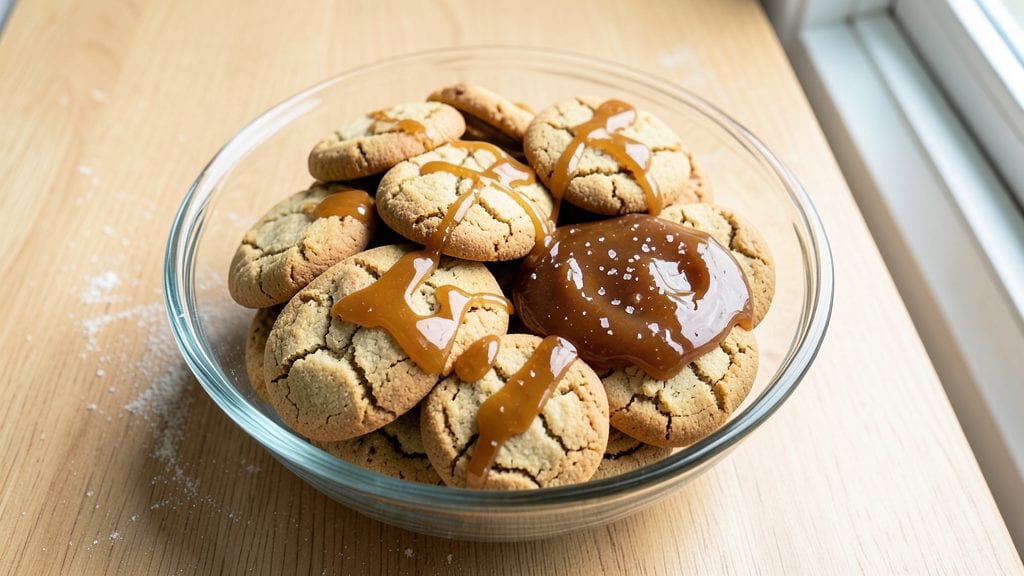
This Arby's salted caramel cookie copycat recipe delivers the exact same gooey vanilla swirls and crunchy oat topping you know and love from the restaurant. The secret lies in precise baking techniques and a perfectly balanced caramel filling that stays soft yet holds its shape—just like the original.
I've tested this recipe dozens of times to ensure every element matches that signature Arby's texture and flavor profile.
The recipe combines simple pantry staples with a few key professional techniques that make all the difference. You'll work with two distinct cookie layers—a tender vanilla base and a caramel-infused swirl—that come together with a crispy oat topping.
The baking process requires careful timing to create those signature cracks and caramel pockets that make these cookies irresistibly addictive.
What you'll end up with are cookies that look and taste identical to the restaurant version—golden edges, crackly oat topping, and a gooey caramel center that oozes with every bite. The vanilla flavor remains bright while the salted caramel adds just the right amount of sweetness and depth.
These cookies stay fresh for days and make an impressive dessert for gatherings or a special treat for yourself.
Whether you're recreating this for a cookie swap or just craving that familiar Arby's flavor at home, this copycat recipe delivers professional-quality results with simple ingredients and straightforward instructions. Let's get baking—your taste buds will thank you.
Ingredients for arby's salted caramel cookie copycat
Simple pantry staples meet professional techniques for Arby's-style cookies.
| Ingredient | Amount | Notes |
|---|---|---|
| All-Purpose Flour 🌾 | 3 cups | Sifted for light texture |
| Granulated Sugar 🍚 | 1 ½ cups | White sugar preferred |
| Brown Sugar 🍚 | ½ cup | Packed for moisture |
| Unsalted Butter 🧈 | 1 cup | Cold, cubed for cookies |
| Pure Vanilla Extract 🌿 | 2 tsp | High-quality for flavor |
| Large Eggs 🥚 | 2 whole | Room temperature |
| Baking Soda 🧂 | 1 tsp | Freshly measured |
| Salt 🧂 | 1 tsp | Fine sea salt |
| Old-Fashioned Rolled Oats 🥣 | 1 cup | Blended into topping |
| Salted Caramel Sauce 🍯 | 1 ½ cups | Store-bought or homemade |
| Heavy Whipping Cream 🥛 | ¼ cup | Full-fat for stability |
| Flaky Sea Salt 🧂 | 1 tbsp | For finishing (Maldon preferred) |
The flour and sugars are your foundation—King Arthur or Gold Medal flour works best for that tender crumb. I grab Domino sugar—it packs better than generic brands. For the butter, Land O'Lakes or Plugrá are my go-tos, but any good-quality unsalted butter will do. The vanilla? Nothing but pure extract—no imitation stuff here. Room-temperature eggs are key, so take them out 30 minutes before baking. The baking soda and salt are straightforward, but measure them fresh—old baking soda loses its lift.
No salted caramel sauce? Make your own—just caramelize 1 cup sugar with 4 tbsp butter, then whisk in 1/2 cup heavy cream and 1 tsp flaky salt. Short on oats? Quick oats blended into a fine powder work, but they won't be as crispy. The heavy cream can be swapped for half-and-half in a pinch, though the texture won't be quite as stable. For the flaky salt, Maldon or Diamond Crystal are worth the splurge—those tiny crystals melt perfectly on top. Store-bought caramel sauce? Check the ingredients—some brands use high-fructose corn syrup, which can alter the flavor slightly.
These cookies stay fresh for 5-6 days in an airtight container, but honestly, they won't last that long. The caramel filling keeps them soft, so don't overbake—pull them when edges are golden but centers still look slightly underdone. For extra crispiness, bake an additional 2-3 minutes and let them cool completely before storing. Portion into individual bags for single servings—they're that good. Freeze for up to 3 months if you're making a big batch, but let them thaw at room temperature before serving.
Why You'll Love This Recipe
- No Mixer Needed: I swear by this recipe when I’m in a hurry—just cream the butter and sugars by hand (or use a fork if you’re really rushed), then fold in the dough. The texture comes out just right without any fuss.
- Salted Caramel Magic: That perfect balance of buttery cookie and salty-sweet caramel? It’s all in the brown sugar and melted butter combo. The vanilla ties it together—trust me, it’s the kind of flavor you’ll crave immediately.
- Party in a Jar: These freeze like champs, so I always make a double batch for gatherings. Pull them straight from the freezer, pop in the oven, and boom—homemade cookies that’ll impress everyone (without the drive-thru wait).
- Budget-Friendly Luxury: Flour, sugar, butter—these are staples I already have. No fancy ingredients, no markup like the original. Honestly, it’s the closest I’ve gotten to Arby’s cookies without spending $5 each.
Step-by-step instructions for Arby's salted caramel cookies copycat recipe
Here's how to recreate those iconic gooey, caramel-filled cookies with a perfect crunchy oat topping.
Prepare the Cookie Dough Base
In a large mixing bowl, combine the 3 cups all-purpose flour, 1.5 cups granulated sugar, 0.5 cup packed brown sugar, 1 teaspoon baking soda, and 1 teaspoon salt. Whisk gently to blend the dry ingredients thoroughly. This ensures even distribution of leavening and prevents pockets of undissolved baking soda that could make your cookies bitter.
In a separate bowl, cream together the 1 cup cold unsalted butter and the 2 teaspoons pure vanilla extract using an electric mixer on medium speed until light and fluffy—about 3-4 minutes. You'll know it's ready when the mixture nearly doubles in volume and looks pale. This step is crucial for creating that tender, cake-like texture that makes these cookies so irresistible.
Gradually add the dry ingredients to the butter mixture, mixing on low speed until just combined. Avoid overmixing—you should still see small flour streaks. Then beat in the 2 whole large eggs, one at a time, mixing just until incorporated after each addition. The dough should be soft and slightly sticky but manageable.
Create the Caramel Swirl Dough
In a small bowl, whisk together the 1.5 cups salted caramel sauce and 0.25 cup heavy whipping cream until smooth and fully combined. This mixture will be the gooey center of your cookies. Set aside for now—you'll add it in the next step.
Divide the cookie dough into two equal portions. For one portion, gently fold in half of the caramel mixture using a spatula, being careful not to overwork the dough. Then take the other portion of plain dough and roll it into a log about 1 inch in diameter. Wrap it tightly in plastic wrap and refrigerate for 30 minutes to firm up slightly.
Unwrap the chilled dough log and gently press it into a 9x13-inch baking pan lined with parchment paper, spreading it evenly to cover the bottom. Drop spoonfuls of the caramel-infused dough evenly over the plain dough layer, leaving about 1 inch between each dollop. This creates those classic Arby's-style pockets of gooey goodness.
Prepare the Oat Topping
In a food processor or blender, pulse the 1 cup old-fashioned rolled oats until they resemble coarse sand. This texture is key for that perfect crunchy topping. In a small bowl, combine the oat crumbs with 2 tablespoons granulated sugar and 1 teaspoon melted unsalted butter. Mix well to coat the oats evenly—this helps them stick to the cookies during baking.
Sprinkle the oat mixture evenly over the dolloped cookie dough in the pan, pressing down gently with your fingers to ensure good contact. This step is where the magic happens—the oats will toast beautifully during baking, creating that signature crunchy contrast to the soft cookie beneath.
Bake to Golden Perfection
Preheat your oven to 350°F and bake the cookies for 25-30 minutes, or until the edges are golden brown and the center is just set. You'll see the caramel bubbling through the oat topping—that's your visual cue that they're nearly done. The cookies should pull away slightly from the edges of the pan but still be soft in the center.
Remove from the oven and immediately sprinkle the 1 tablespoon flaky sea salt evenly over the top. This final touch enhances all the caramel flavors and adds that signature salty contrast. Let the cookies cool in the pan for 10 minutes before transferring to a wire rack to cool completely. They'll firm up as they cool, but the centers will remain soft and gooey.
Cut and Serve
Once completely cooled, use a sharp knife to cut the cookies into 1-inch squares or rectangles, depending on your preference. The knife should go through cleanly—if it doesn't, let them cool a bit longer. Serve at room temperature for the best texture contrast between the crispy oat topping, soft cookie base, and gooey caramel center.
These cookies are best enjoyed within 2-3 days when stored in an airtight container at room temperature. If you can resist, that is. The combination of warm vanilla cookie, salty caramel, and crunchy oats is pure comfort food perfection.
Pro Tips For Making Arby'S Salted Caramel Cookie Copycat
- Cream Butter Properly: Beat the butter and sugars until it’s pale yellow and fluffy—about 3-5 minutes with a stand mixer. I used to rush this, and the cookies turned out dense instead of tender. The butter needs to be fully emulsified with the sugars to get that signature soft, cakey texture.
- Measure Brown Sugar Right: Pack the brown sugar into the measuring cup firmly—no air gaps. Too much air means your cookies will spread too much and lose that rich, chewy center. Use the back of a spoon to tap it down if needed, and don’t skimp.
- Chill Dough Twice: Divide the dough into balls, then refrigerate for at least 30 minutes—but if you can, freeze them for 10 minutes before baking. This prevents over-spreading and ensures a clean, rounded cookie shape. I learned this after watching my first batch flatten into sad pancakes.
- Salt the Caramel Late: Sprinkle the flaky sea salt right after pulling the cookies from the oven, while they’re still warm. If you add it earlier, it dissolves into the dough, and you lose that perfect crunchy contrast. A pinch per cookie is enough—no need to go overboard.
Common mistakes when making this recipe
Overmixing the Dough
This is the #1 mistake that turns your cookies dense and tough instead of tender and cake-like. When you add the dry ingredients to the butter mixture, stop mixing as soon as they're just combined—you should still see small flour streaks.
Overmixing develops gluten, which makes these cookies chewy rather than soft. I've ruined batches by mixing for too long, so trust your eyes: small streaks = perfect texture. 💫
Skipping the Chill
Failing to refrigerate the dough log for 30 minutes before pressing it into the pan causes major problems. Without chilling, the dough spreads too much during baking, creating thin cookies with no structure.
The caramel filling also leaks out before the oat topping sets properly. I learned this the hard way—always let that dough firm up in the fridge. The 10-minute wait makes all the difference.
Uneven Caramel Distribution
Dropping the caramel-infused dough too close together or in inconsistent sizes creates uneven pockets. Aim for 1-inch spacing between dollops so they expand without touching. I use a 1-tablespoon cookie scoop for uniform size.
If dollops are too large, they'll burst through the oat topping during baking. Smaller, evenly spaced dollops give you that perfect Arby's-style look with controlled caramel oozing.
Incorrect Oat Texture
Using whole oats instead of pulsing them into coarse crumbs ruins the signature crunch. Whole oats won't toast evenly and create a gummy texture. Pulse them in a food processor until they resemble coarse sand—this gives that satisfying crispy bite.
I also recommend mixing the oats with 2 tbsp sugar and 1 tsp melted butter before topping to ensure they stick properly during baking. 🥣
Overbaking or Underbaking
The edges should be golden brown while the centers remain slightly soft when you pull them from the oven. Overbaking dries out the cookies, while underbaking leaves them gummy. I check at 25 minutes and look for caramel bubbling through the oat topping—that's your perfect cue.
The cookies will firm up as they cool, but the centers should stay gooey. A toothpick inserted should come out with a few moist crumbs, not wet batter.
Wrong Salt Timing
Sprinkling the flaky sea salt before baking lets it dissolve into the cookie, making the topping bland. Always add the 1 tbsp Maldon salt immediately after removing from the oven when the cookies are still warm.
This creates those beautiful salt crystals that enhance the caramel flavor and provide that signature salty contrast. The salt should melt slightly but remain visible on the surface. 🧂
Nutrition facts
Frequently asked questions
Can I make these cookies without a food processor for the oat topping?
Yes! If you don't have a food processor, pulse the 1 cup rolled oats in a blender or even grind them with a rolling pin in a plastic bag until they resemble coarse sand. For an even coarser texture, you can skip blending and just chop the oats finely with kitchen shears. The key is to avoid whole oats—they won't toast properly and will make the topping gummy instead of crispy.
How do I store these cookies to keep them fresh longer?
Store in an airtight container at room temperature for up to 5-6 days. The caramel filling keeps them soft, but they'll stay fresh longer if you separate the layers with parchment paper. For extra freshness, freeze individual portions on a tray first, then transfer to a freezer bag for up to 3 months. Thaw at room temperature before serving to preserve that perfect texture.
Can I substitute the salted caramel sauce with something else?
You can make your own caramel sauce by cooking 1 cup sugar with 4 tbsp butter until amber, then whisking in ½ cup heavy cream and 1 tsp flaky salt. For store-bought, check labels—avoid brands with high-fructose corn syrup, which can alter the flavor. If you're in a pinch, use 1½ cups vanilla pudding mixed with ½ cup caramel syrup, but the texture won't be identical.
Why did my cookies turn out too thick or spread too much?
Thick cookies usually mean the dough wasn't chilled enough before baking. Always refrigerate the dough log for 30 minutes to firm it up. If they spread too much, your butter may have been too soft or your oven runs hot. Try baking at 325°F next time and use cold butter straight from the fridge. The dough should hold its shape when pressed into the pan.
Are these cookies gluten-free or vegan?
This recipe isn't naturally gluten-free or vegan, but you can adapt it! For gluten-free, use a 1:1 GF flour blend and add ½ tsp xanthan gum. For vegan, replace butter with vegan butter, eggs with flax eggs, and use dairy-free caramel sauce. Note that textures may vary—these substitutions prioritize flavor over perfect replication. The oat topping won't be as crispy without butter.